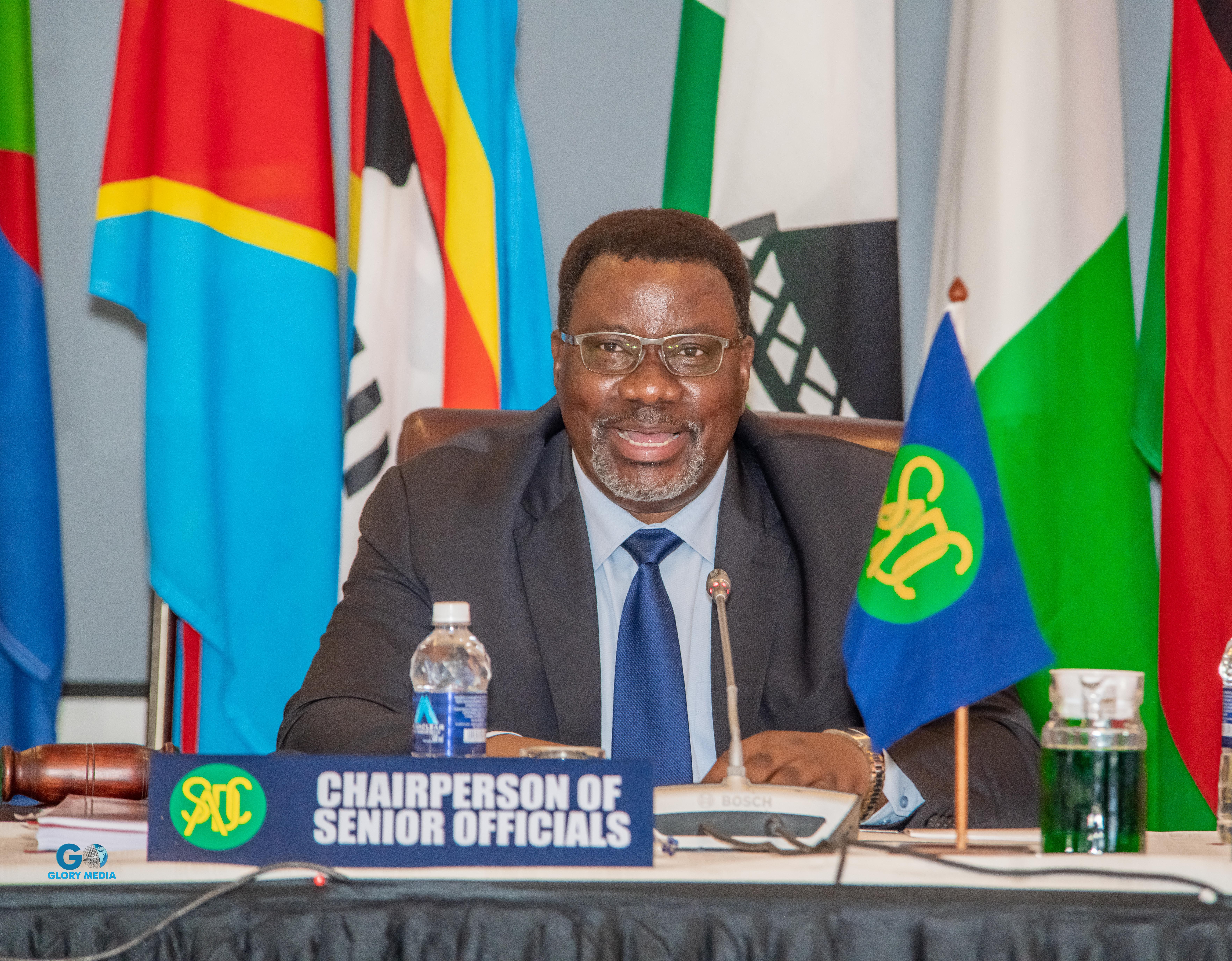
The Southern African Development Community (SADC) commenced the meeting for Senior Officials Responsible for Disaster Risk Management on 11th May 2026 in Masvingo, Republic of Zimbabwe. The meeting serves as a precursor of the sixth Ordinary Meeting of Ministers Responsible for Disaster Risk Management which will be held on 13th May 2026, amongst others, to consider progress on the implementation of the decisions made during the previous Summits of Heads of State and Government, SADC Council of Ministers and Ministers Responsible for Disaster Risk Management.
The meeting was officially opened by Dr. Elias Sithole, Head of National Disaster Management Centre in South Africa and Chairperson of the Senior Officials responsible for Disaster and Risk Management who noted that the SADC region continues to experience the growing impacts of climate change and disaster risks, including Tropical Cyclones, floods, droughts, wildfires, disease outbreaks and other complex emergencies which continue to negatively affect livelihoods, infrastructure, food security and economic development.
He reminded the delegates that disasters do not respect borders, therefore, their response requires strengthened regional solidarity, coordinated preparedness, timely early warning systems, and collective action to build resilient communities.
Dr. Sithole encouraged the Member States to remain committed to the implementation of the adopted Frameworks such as the Sendai Framework for Disaster Risk Reduction 2015–2030, the African Union Programme of Action, and the SADC Regional Disaster Risk Management Priorities.
Mr. Nathan Nkomo, Acting Permanent Secretary for Local Government and Public Works from the Republic of Zimbabwe in his welcome remarks, highlighted that the meeting serves as a crucial platform for fostering regional cooperation and reaffirming the collective commitment to enhancing resilience against the escalating challenges posed by both natural and human-induced disasters. He emphasised that robust disaster risk management transcends national priorities and stands as a fundamental pillar for sustainable development across our region.
Mr. Nkomo urged the delegates to engage in a comprehensive discussion, sharing best practices and developing strategic, actionable plans to bolster their preparedness, response, and recovery mechanisms. This meeting is convened at a critical juncture, as climate change accelerates, urban populations expand rapidly, and new vulnerabilities emerge, demanding innovative, coordinated, and forward-looking approaches, he said.
For her part, Ms Angele Makombo N’tumba, SADC Deputy Executive Secretary for Regional Integration emphasised on the need for Member States to continue strengthening preparedness before disasters occur. This must be supported by timely national contingency planning, predictable financing, as well as functional early warning and early action systems, she said.
The Deputy Executive Secretary noted that the meeting comes at a critical time when the region continues to face a changing and increasingly complex disaster risk landscape. She said the 2025/26 season has once again reminded everyone that disasters in the region are no longer isolated events, but recurrent, transboundary, and cascading, affecting lives, livelihoods, infrastructure, and the broader development trajectory of the Member States.


