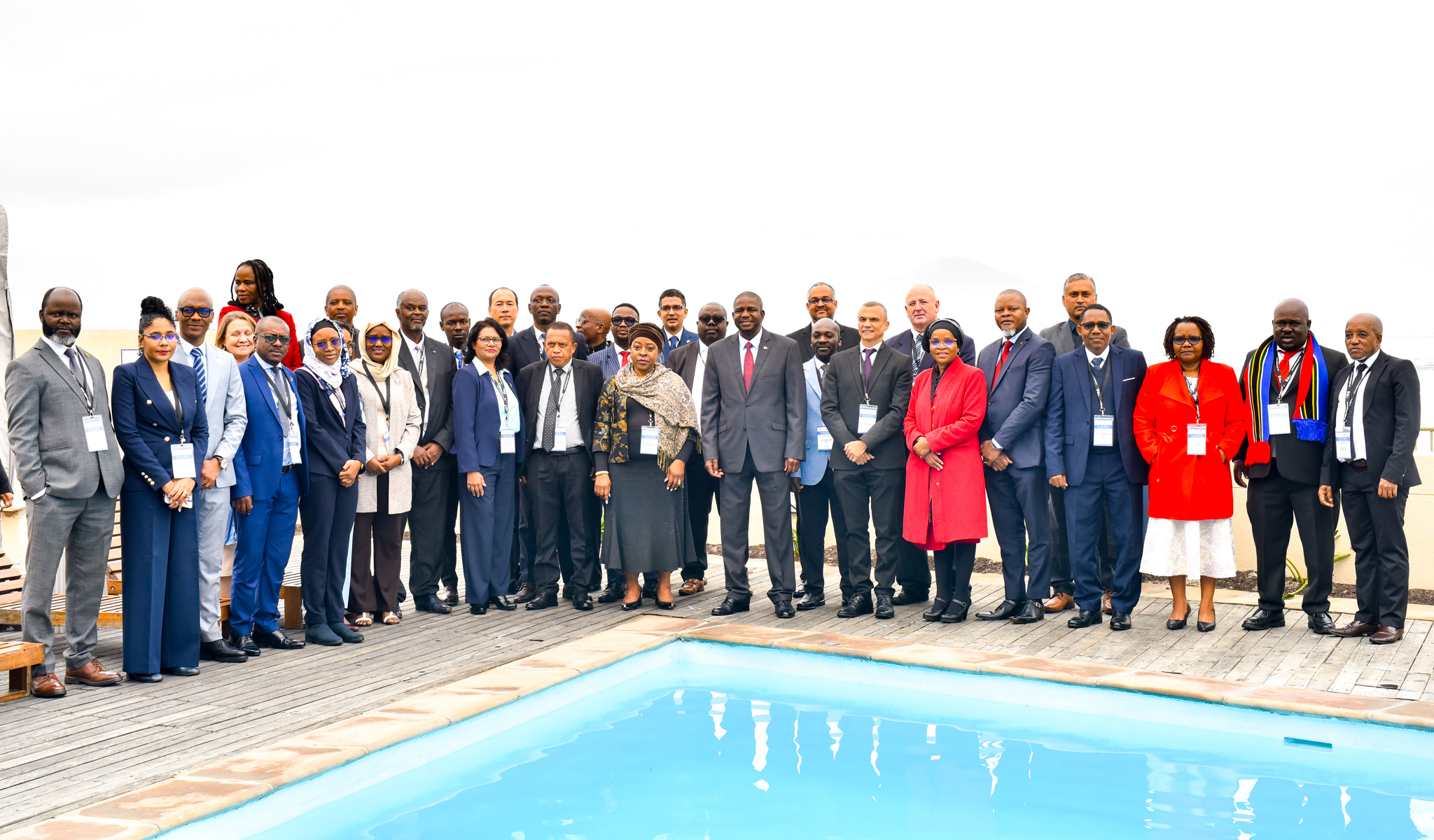
The Southern African Development Community (SADC), with the support of the Republic of South Africa, hosted the SADC Statistics Committee Meeting in Cape Town during 26-28 May 2026.
The meeting sought to strengthen the harmonisation and coordination of National Statistical Systems across SADC Member States in support of deeper regional cooperation and the production of reliable, comparable and timely statistics based on common standards, shared priorities and collective development objectives. The meeting also aimed to advance regional statistical capacity, promote innovation in official statistics and modernise statistical production systems.
In his opening remarks, Mr. Risenga Maluleke, Statistician-General of the Republic of South Africa and Chairperson of the SADC Statistics Committee, reaffirmed the region’s commitment to strengthening official statistics despite increasingly complex global social, economic and environmental challenges. He emphasised that statistics remain the foundation upon which sound policy, effective planning and accountable governance are built as the region advances regional integration, sustainable development and inclusive growth.
Mr. Maluleke noted that reliable, timely and comparable statistics are essential for achieving the aspirations of the SADC Regional Indicative Strategic Development Plan (RISDP), the African Union’s Agenda 2063 and the United Nations Sustainable Development Goals (SDGs).
He further described statistics as instruments of transformation, highlighting that quality statistics enable the region to effectively measure poverty, inequality and unemployment, while also supporting the monitoring of trade flows, migration, food security, climate vulnerability, education outcomes and health systems.
He commended Member States for progress made in areas such as civil registration and vital statistics, population and housing censuses, economic statistics, environmental statistics and the development of regional indicators. He further encouraged Member States to keep pace with evolving technologies and the growing demand for real-time information.
Ms. Angéle Makombo N’Tumba, SADC Deputy Executive Secretary for Regional Integration, underscored the critical role of statistics in informing policy decisions, monitoring socio-economic trends and strengthening accountability in public policy implementation amid intensifying global, regional and national challenges.
She called on Member States to make use of innovative data sources to tap in the potential benefits of modern statistical systems in order to meet the increasing demand for data through the expanded use of administrative data, big data, artificial intelligence and machine learning technologies.
Ms. Makombo N’Tumba further highlighted the importance of the signing and ratification of the SADC Protocol on Statistics by Member States, describing it as a cornerstone for strengthening trust, professionalism, coordination and the credibility of official statistics across the region.
She also noted the significant progress made by the SADC Secretariat in modernising regional statistical systems through the operationalisation of the SADC Open Data Portal, the Trade Statistics Processing System and the Labour Market Information System.
She emphasised that the sustainability and effectiveness of these specialised systems will require continued commitment and support from Member States to ensure that users have access to accurate, timely and up-to-date regional statistics for monitoring regional integration and development policies.
The meeting reviewed progress in the implementation of the SADC Statistics Programme, including the SADC Protocol on Statistics, the Regional Strategy for the Development of Statistics (RSDS) and the SADC Regional Project. The meeting also examined progress reports and frameworks relating to macroeconomic, poverty, trade, gender, price, agriculture and labour statistics.
In addition, the meeting deliberated on regional and national statistical policy instruments, with key areas of focus including:
implementation of regional statistical programmes;
assessment of progress, findings and recommendations arising from statistical capacity-building activities;
evaluation of progress on the digital transformation of regional statistics aimed at enhancing efficiency in statistical service delivery;
review of the implementation of regional statistical development initiatives, including the RSDS;
updates on international statistical standards and continental statistical integration processes;
promotion of the harmonisation of statistical methodologies, standards and indicators across SADC Member States in line with international best practices; and
strengthening coordination of data collection, reporting and monitoring for economic, social and environmental indicators.
The meeting brought together statistical experts and policymakers from across the SADC region, as well as representatives from the World Bank, African Development Bank, International Labour Organization (ILO) and UN Women.
| Attachment | Size |
|---|---|
| DES RI Opening Remarks Statistics Committee.pdf (101.37 KB) | 101.37 KB |
| Remarks - Mr Risenga Maluleke SA Statistician-General .pdf (442.4 KB) | 442.4 KB |


