From 24 to 31 January 2026, the Southern African Development Community (SADC) demonstrated strong regional solidarity through the deployment of its Emergency Response Team (ERT) in support of the Government of the Republic of Mozambique, following severe flooding that affected several provinces, particularly Gaza and Maputo, Sofala, extending to Inhambane and Zambézia. To date, more than 700,000 people have been affected, with 14 fatalities, widespread housing damage and significant disruptions to schools, health facilities and other critical infrastructure. As SADC concludes the assessment phase of its intervention, focus now shifts toward consolidating assessment findings and supporting ongoing response and early recovery efforts led by national and local authorities.
Her Excellency Ms. Luísa Celma Meque, President of the National Institute for Disaster Risk Management and Reduction (INGD), underscored the importance of SADC’s deployment, noting that the presence of the team has strengthened national coordination, enhanced operational coherence and reinforced ongoing response and relief efforts. She emphasised that the deployment reflects the principles of regional unity, solidarity and collective responsibility that underpin SADC. She further conveyed the Government of Mozambique’s appreciation for SADC’s contribution to the humanitarian response, highlighting that the regional support demonstrates the Community’s commitment to standing with its Member States in times of crisis and responding collectively to shared challenges.
Brigadier General Chere Makhetha, Chief of Staff at the SADC Secretariat conveyed SADC’s solidarity with the Government and people of Mozambique following the devastating floods. He underscored that the SADC ERT was on the ground to work closely with national authorities to support early recovery efforts aimed at alleviating the impacts of one of the largest displacement crises experienced in the region.
He further highlighted that SADC’s support is being implemented in two phases. The first phase focuses on the immediate humanitarian response, including search and rescue operations and comprehensive assessments of flood impacts. This, he said, will be followed by a recovery and reconstruction phase, which will support the rehabilitation and rebuilding of damaged infrastructure and assist affected communities in restoring livelihoods and strengthening resilience to future disasters.
This deployment marked the first activation of SADC’s Emergency Response Team under the provisions of the SADC Humanitarian and Emergency Operations Centre (SHOC), as mandated by the SADC Council of Ministers to coordinate regional disaster preparedness, response and early recovery. The mission was made possible through close collaboration with the European Commission’s Directorate-General for European Civil Protection and Humanitarian Aid Operations (DG ECHO), the United Nations Office for the Coordination of Humanitarian Affairs (OCHA), and the United Nations Disaster Assessment and Coordination (UNDAC), which provided technical support. The World Food Programme (WFP) provided financial and logistical support to the deployment.
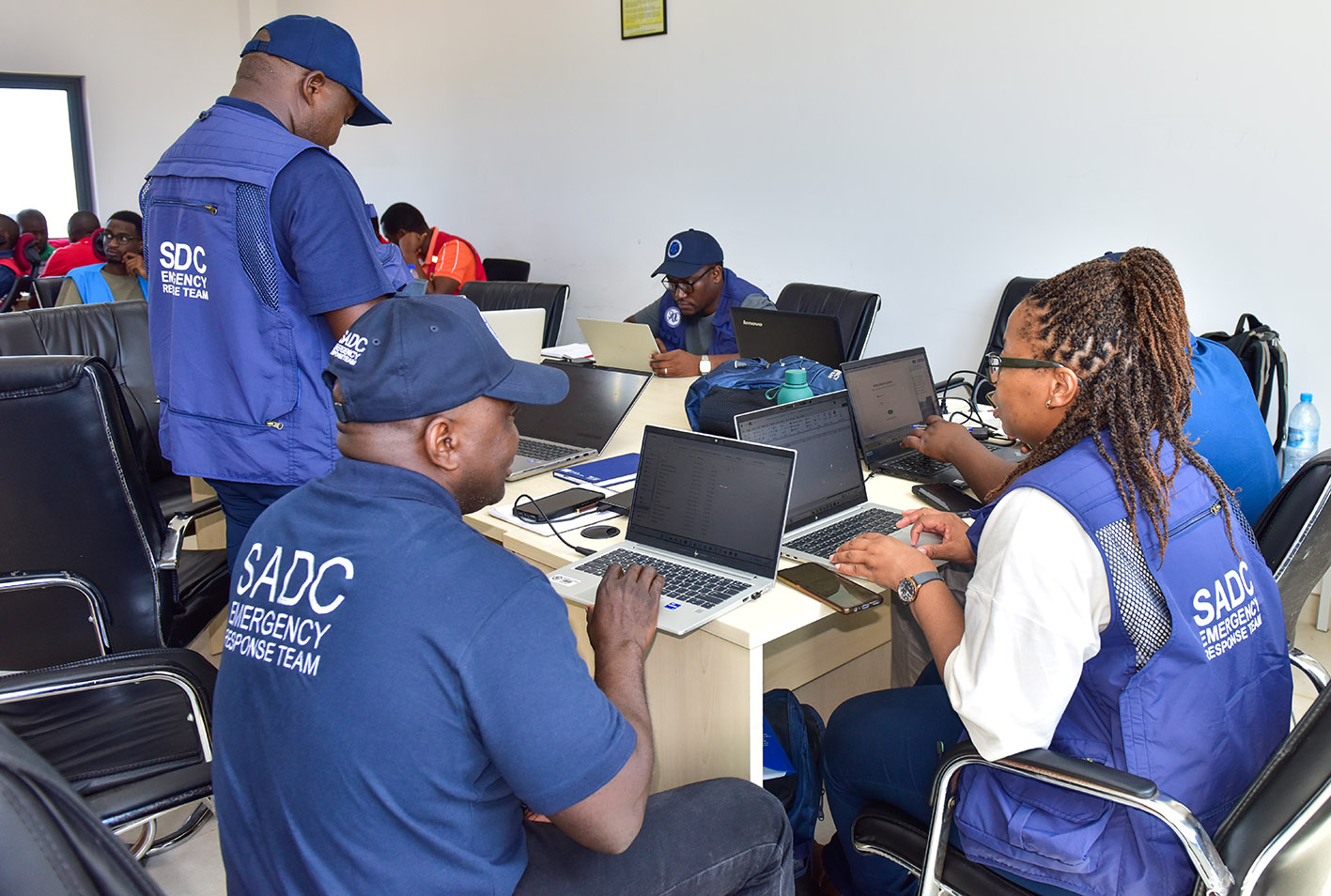
The SADC ERT comprised a multidisciplinary team of experts in safety and security, logistics, search and rescue, information management and data collection, public health emergency response, civil–military coordination, communications, and multisectoral assessment.
Operating within Mozambique’s government-led coordination framework, the SADC ERT was fully integrated into national and provincial response structures, working closely with INGD, line ministries, and humanitarian partners. The team contributed to joint flood impact assessments, including assessments of shelters and accommodation centres, with a focus on data collection, documentation of impacts, information management, identification of priority needs and gaps, and evaluation of safety, protection, and public health risks. These efforts enhanced the collective understanding of the humanitarian situation and informed coordinated response planning in line with national priorities and established humanitarian standards.
As an added value to the response, the SADC ERT played a critical coordination role by facilitating regular field-level engagements among international and national humanitarian partners. These engagements enabled timely information exchange, promoted a shared understanding of the magnitude and impacts of the floods, and helped ensure consistency in assessments and reporting. In line with SADC’s mandate to strengthen regional cooperation and coordination, the ERT reinforced linkages between government authorities, humanitarian actors, and regional mechanisms, contributing to a more coherent, harmonised and effective government-led response.
Throughout the mission, SADC’s engagement underscored the importance of timely regional support, collective action and respect for national leadership in disaster response. As Mozambique transitions from emergency response toward recovery and resilience, SADC remains committed to supporting the country through coordinated regional mechanisms, reinforcing the principles of solidarity, cooperation and shared responsibility that underpin the regional community.
In parallel, SADC activated internal processes to facilitate access to the Regional Disaster Fund, complementing national and international resource mobilisation efforts in support of the Republic of Mozambique.


