The Southern African Development Community (SADC) Ministers have called for coordinated regional action to protect food systems by enhancing fertilizer harmonisation, crop development and control of animal disease such as Food and Mouth (FMD)to enhance regional food security and resilience.
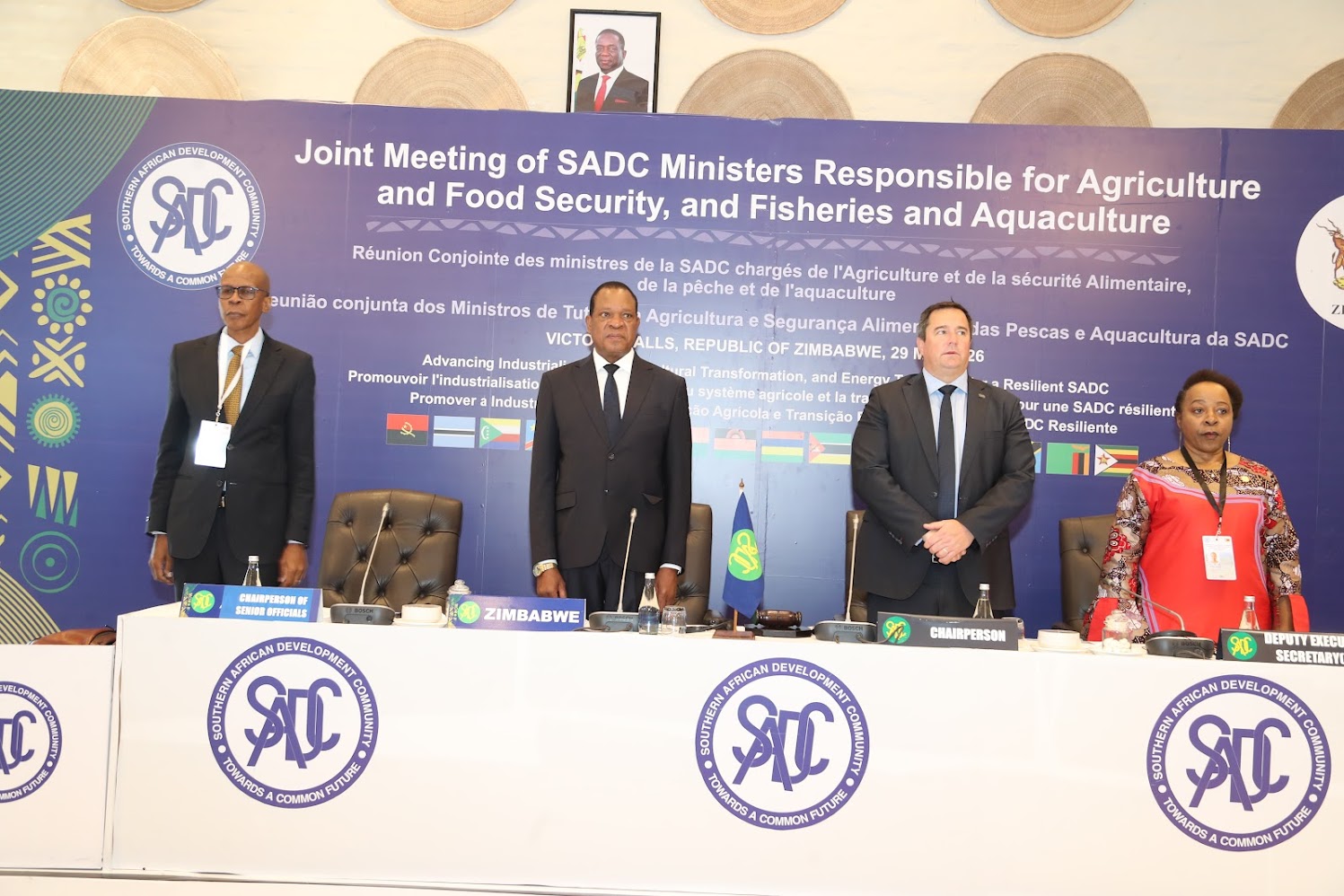
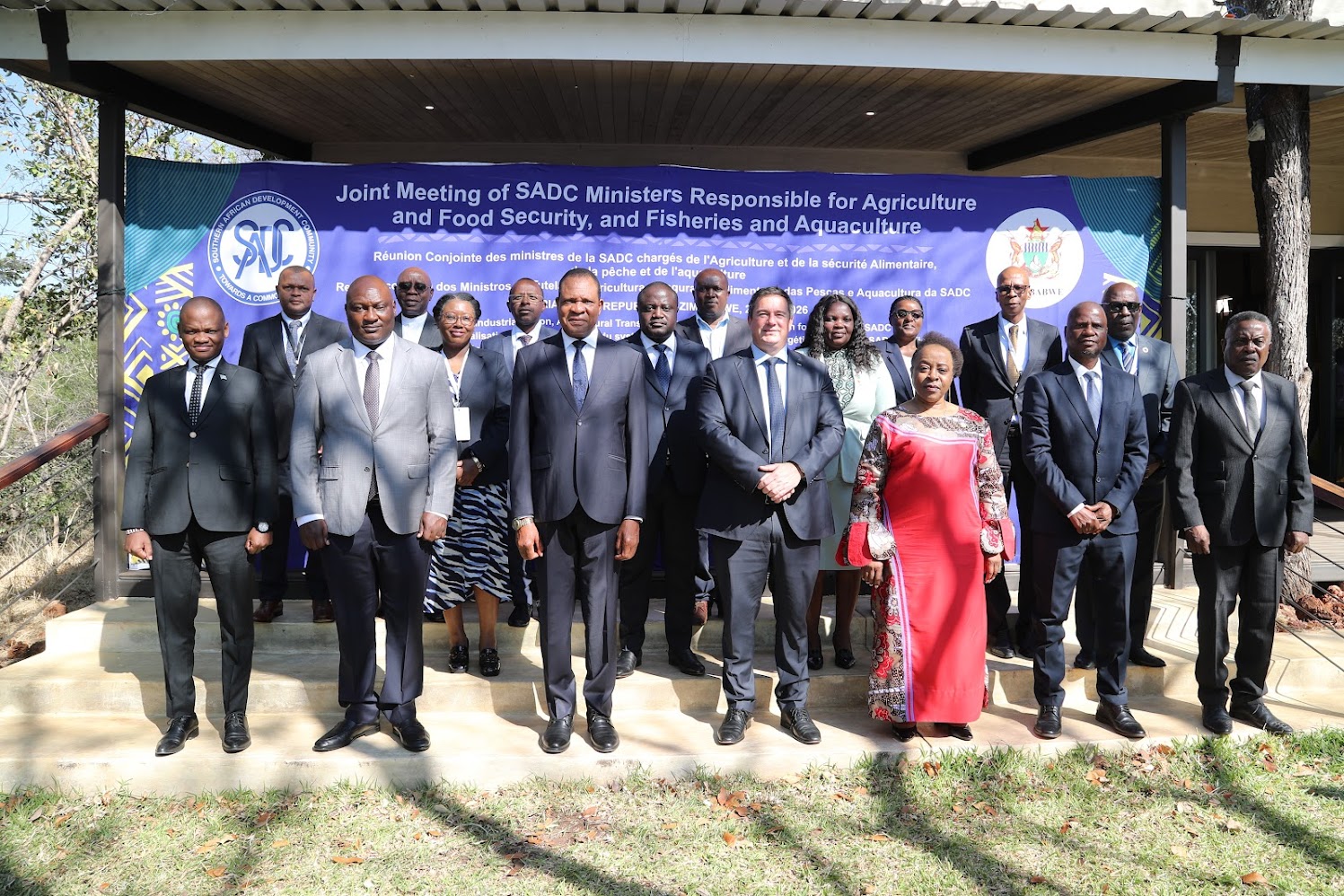
The SADC Committee of Ministers responsible for Agriculture, Food Security, Fisheries and Aquaculture made the call at the meeting held on 29 May 2026 in Victoria Falls, Republic of Zimbabwe.
Chairperson of the SADC Committee of Ministers responsible for Agriculture, Food Security, Fisheries and Aquaculture, John Henry Steenhuisen, Minister of Agriculture of the Republic of South Africa called on the SADC Member States to fast-track the adoption of the Memorandum of Understanding on Fertiliser Regulatory Frameworks to cut costs and boost resilience, highlighting that SADC “can no longer afford delay” on harmonising fertilizer regulations.
On the Foot and Mouth Disease (FMD) Outbreak and other transboundary diseases, Hon. Steenhuisen highlighted the need for swift and collective action, urging Member States to prioritise cross-border surveillance, traceability, coordinated vaccination, and a stronger ‘One Health’ approach linking animal health, trade, and ecosystems.
“Animal diseases do not respect borders. Our collective resilience depends on the resilience of our neighbours and preparedness is always less costly than prolonged outbreaks.” he said, noting that the SADC region needs to adopt a Regional Coordination Framework and a proposed SADC FMD Vaccine Bank.
He highlighted that a region that invests in stronger veterinary systems, regional surveillance, coordinated Sanitary and Phytosanitary (SPS) measure and modernised agricultural systems positions itself to compete more effectively in global markets while protecting food affordability and rural livelihoods at home.
The Minister of Agriculture, Mechanisation and Water Resources Development of the Republic of Zimbabwe, Honourable Dr Anxious Jongwe Masuka said the quadruple burden of undernourishment, stunting, wasting and co-morbidities prevailing in the SADC region demands urgency and urged Member States to adopt a collaborative approach to contain and manage transboundary pests and diseases of crops and livestock that pose a risk to food systems.
Hon. Dr. Masuka said Zimbabwe and Southern Africa are predicted to become drier in the decades ahead, making climate-proofing agriculture essential.
The SADC Deputy Executive Secretary for Regional Integration, Ms. Angèle Makombo N’Tumba stressed that “agriculture is the backbone of the SADC region, sustaining over 70% of the SADC population with livestock alone contributing up to 40 percent of agricultural GDP.
She noted that climate change remains a persistent challenge requiring decisive and long-term measures to minimise the impact of climate change to sustain the agriculture sector.
She also pointed to a 77 percent probability of El Niño affecting the region by late 2026 based expert predictions. “We must start preparing now for such a possibility” said Ms. N’Tumba, urging Member States to use the SADC Plant Genetic Resources Centre, whose mandate is to coordinate collection, conservation and utilisation of plant genetic diversity of the region, to breed drought-tolerant varieties.
The SADC Deputy Executive Secretary highlighted that fisheries and aquaculture play a crucial role in enhancing food and nutrition security, employment creation and economic growth in the SADC region. She also pointed that there is an opportunity to find ways to strengthen regional cooperation in combating illegal, unreported and unregulated fishing, improving aquatic health system and promoting sustainable management of shared water resources through fisheries and aquaculture development.
Key outcomes from the Ministerial Meeting
During the meeting
Ministers approved the Draft Memorandum of Understanding on Harmonisation of Fertiliser Regulatory Frameworks in the SADC Region whose purpose is to provide Members States with a framework to facilitate the harmonisation of rules governing the production, sale and distribution, trade, and quality control of fertiliser in the SADC region.
Ministers urged Member States to strengthen fertilizer market intelligence to protect and facilitate smallholder farmers’ access to fertilisers and all essential inputs through well targeted subsidy programmes.
Ministers approved the “Framework for Strengthening Foot‑and‑Mouth Disease Control in Southern African Development Community through a Regional Coordination Approach” aimed at enhancing regional capacity to manage FMD as a transboundary disease through harmonized surveillance, coordinated cross‑border response, and effective wildlife–livestock interface risk management aligned with the SADC, Food and Agriculture Organization (FAO) and World Organisation for Animal Health (WOAH) standards.
Ministers urged Member States to establish progressive Foot and Mouth disease zoning and compartments for inter-regional trading; establish a Regional FMD Vaccine Bank; update their disease control legislation and ensure enforcement; and implement SADC One Health Roadmap.
Ministers approved SADC Feed and Fodder Strategic Framework to harmonise policies, strengthen collaboration among Member States, and promote investment in feed production, processing, and distribution systems in the SADC region.
Ministers urged member States to implement Regional Guidelines for Management of Pesticides and Risk Reduction; Guidelines of Biopesticides Registration; and Regional Strategy on Management of Highly Hazardous Pesticides (HHPs), through a multi-sectoral approach and stakeholders’ involvement to enhance coordination in recognition of food safety, environmental integrity maintenance and trade facilitation.
Ministers recognised the need for youth involvement in in agribusiness and urged Member States to integrate youth priorities into National Agrifood Systems Investment Plans (NASIP) / Regional Agrifood Systems Investment Plan (RASIP) and allocate dedicated resources to youth-focused agribusiness programmes including establishment and strengthening of Youth Desks within Ministries of Agriculture.
Ministers urged Member States to accelerate private‑sector–led rice value chain development by facilitating private sector investment across rice production, milling, storage, and marketing by promoting Private-Public Partnerships PPs, improving access to finance, and aligning national rice programmes with the Regional Rice Development Strategy and the Coalition for African Rice Development (CARD) Phase 2 targets.
Ministers urged Member State to domesticate Kampala Comprehensive Africa Agriculture Development Programme (CAADP) Declaration aimed at accelerating the transformation of agrifood systems while ensuring equitable benefits for all stakeholders, especially women, youth and vulnerable groups.
Ministers urged Member State to urgently strengthen regional coordination on food and input markets to prevent price spikes and supply disruptions through among others, establishment of SADC regional cereal reserves, regional fertilizer reserve and early‑warning and joint fertilizer procurement mechanism to cushion Member States that are highly import‑dependent and vulnerable to global price volatility.
Ministers acknowledged that the Middle East Conflict has disrupted the supply of nitrogen, urea and ammonia fertilisers that farmers across the region depend on and advocated for the development of resilient agriculture and food systems to mitigate the impact the conflict and other climate, pandemic, conflict and macro-economic shocks.
Ministers acknowledged that fisheries and aquaculture play an important role in enhancing food and nutrition security, job creation, and economic growth in the SADC region, and urged Member States to strengthen measures for sustainable management of small-scale fisheries, including protection of fishing grounds and participation in transparency initiatives.
Ministers urged State Parties and Member States to support the SADC Regional Fisheries Monitoring Control and Surveillance Coordination Centre (MCSCC) efforts towards sustainability, including through support to implementation of the SADC Regional Register of Fishing Vessels (RRFV) to improve transparency, compliance, and harmonised monitoring across the SADC region. The Ministers commended Member States that have signed the Charter establishing the MCSCC and urged those that have not yet signed, to do so for the centre to fully fulfil its mandate of coordinating national, regional, and international efforts to combat Illegal, Unreported and Unregulated (IUU) fishing.
Ministers urged Member States to support regional initiatives against monofilament nets and other illegal fishing nets for the responsible and sustainable use of the SADC’s living aquatic resources and ecosystems and for the livelihood of fishing communities, including establishing a regional task team and supporting development of a regional strategy towards an ultimate ban of the use of monofilament nets in fisheries.
Ministers commendedthe Government of Mozambique for finalising the signing of the Host Country Agreement and registering the MCSCC as a Diplomatic Organisation, to ensure a smooth operationalisation of the MCSCC.
Ministers urged all stakeholders, including development and technical partners, to recognize the SADC Soil Health and Fertilizer Hub and National Soil Health and Fertilizer Hubs as the primary coordination and implementation entities for all soil health and fertilizer-related interventions at regional and national levels, respectively. The SADC Soil Health and Fertilizer Hub is hosted by the Centre for Coordination of Agricultural Research and Development in Southern Africa (CCARDESA), which coordinates harmonisation of the implementation of agricultural research and development in the region.
Representatives from FAO, WOAH and Botswana Vaccine Institute provided their expert insights on measures to contain FMD.