
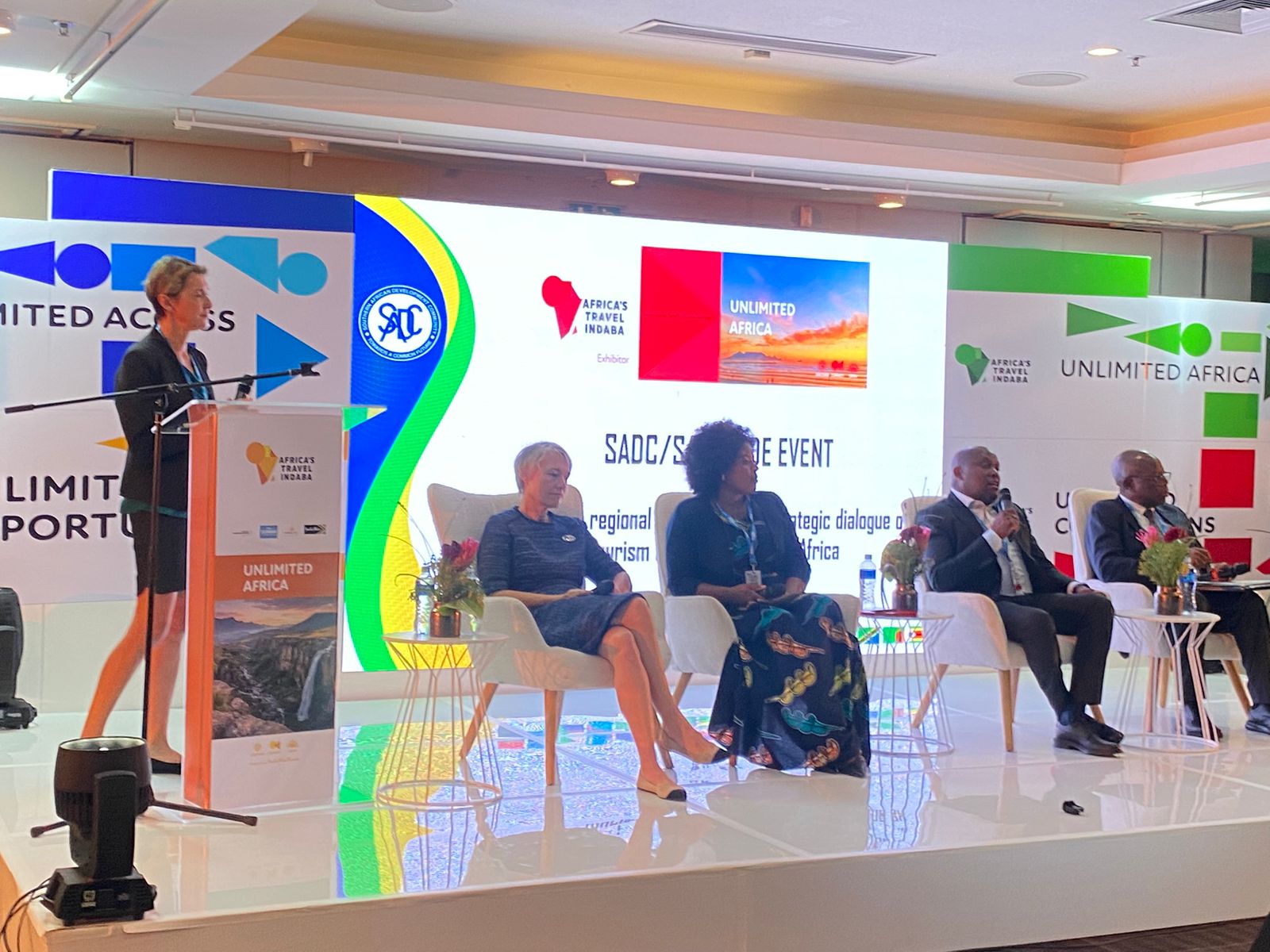
The Southern African Development Community (SADC) UniVisa has taken significant steps towards its adoption and implementation following the review by the SADC Ministers responsible for Tourism. The SADC UniVisa initiative aims to streamline travel across Southern Africa by introducing a single tourist visa, enhancing regional integration and boosting tourism growth
Ms. Marygoreth Mushi, Programme Officer for Policy and Market Development at the SADC Secretariat told delegates and panellists at the side event jointly convened by SADC and the Southern Africa Tourism Alliance (SATA) at the Africa’s Travel Indaba held in Durban, South Africa on 13 May 2026 that the UniVisa is advancing through the regional inter-ministerial process.
The dialogue, which was opened by the Deputy Minister of Tourism of the Republic of South Africa and Deputy Chairperson of the Committee of SADC Ministers of Tourism, Honourable Makhotso Magdeline Sotyu, brought together public and private sector leaders to discuss visas, air access and border efficiency – the three pillars the industry has identified as critical to unlocking regional tourism growth.
During the side event, Ms. Mushi set out the broader scope of work under the SADC Tourism Programme 2020-2030, stating that, through the SADC Tourism UniVisa now advancing toward Heads of State, the air access study and its recommendations, the border post audit commencing in July, and the tourism market strategy positioning the SADC Transfrontier Conservation Areas, the region is turning protocols into tangible, regional solutions.
SATA Project Lead Ms. Natalia Rosa framed the stakes for the trade audience, highlighting that regional connectivity is the single most important strategic conversation the tourism sector should be having right now.
“Every other conversation, about brand, about positioning, about the growth of our visitor economy, is downstream of it. What this gathering has shown is that implementation is underway, and that the next phase will be unlocked by the private sector being specific, costed and coordinated about what it needs from policymakers, and by the public sector being equally specific, time-bound and accountable about what it will deliver in return,” she highlighted.
Panellists at the Indaba called for a move beyond the ‘public sector versus private sector’ towards a shared ‘team tourism’ identity for the region. The shift, which emerged from a private sector working session earlier in the week, was endorsed across the panel and the floor.
Panellists used the session to table concrete proposals. Mr. Aaron Munetsi, Chief Executive Officer (CEO) of the Airlines Association of Southern Africa, said taxes, fees and charges on air transport across Africa are on average 49% higher than the global benchmark, and called for the alignment of aviation policy, taxation and pilot licensing across all 16 SADC member states.
Mr. Jillian Blackbeard, CEO of Africa’s Eden Tourism Association, proposed a SADC-wide tourist border post training programme with dedicated tourist channels, consistent processes across crossings and recognition for best-performing borders.
On her part, Ms. Dimakatso Malwela, President of Women of Value Southern Africa, called for a supply development pilot across three to five member states to generate measurable economic participation for women-led businesses along the tourism value chain, with results reported back within twelve months.
A live poll among delegates identified three new intra-regional air routes and one-stop border posts at the region’s three busiest crossings as the interventions most likely to move the needle in the next 24 months.
Tshifhiwa Tshivhengwa, CEO of the Tourism Business Council of South Africa and Chairperson of SATA, closed the dialogue by calling on private sector apex bodies across SADC Member States to commit to coordinated action and move away from relying external support to drive the regional agenda.
As a next step, SATA will work with the SADC Secretariat to develop a coordinated, costed regional position on visas, air access and border efficiency ahead of the August Summit.
In the closing public sector reflection, the Director-General of the Department of Tourism, South Africa, and Chairperson of the SADC Committee of Senior Officials of Tourism, Mr Nkhumeleni Victor Vele, welcomed the proposals tabled and underlined the need for practical, costed and coordinated solutions designed within the realities of SADC’s regional development model.
A border post audit commences in July 2026 to develop best-practice guidelines at the region’s crossings. A completed air access study has produced recommendations on harmonising aviation policy and advancing the Single African Air Transport Market. A market development strategy is positioning ten Transfrontier Conservation Areas as regional destinations. The implementation work is supported by the German Government and the European Union and implemented through Deutsche Gesellschaft für Internationale Zusammenarbeit (GIZ), whose contributions have enabled the development of the regional tourism market strategy for the SADC Transfrontier Conservation Areas and the SADC region’s annual participation in international tourism trade fairs since 2023.


