
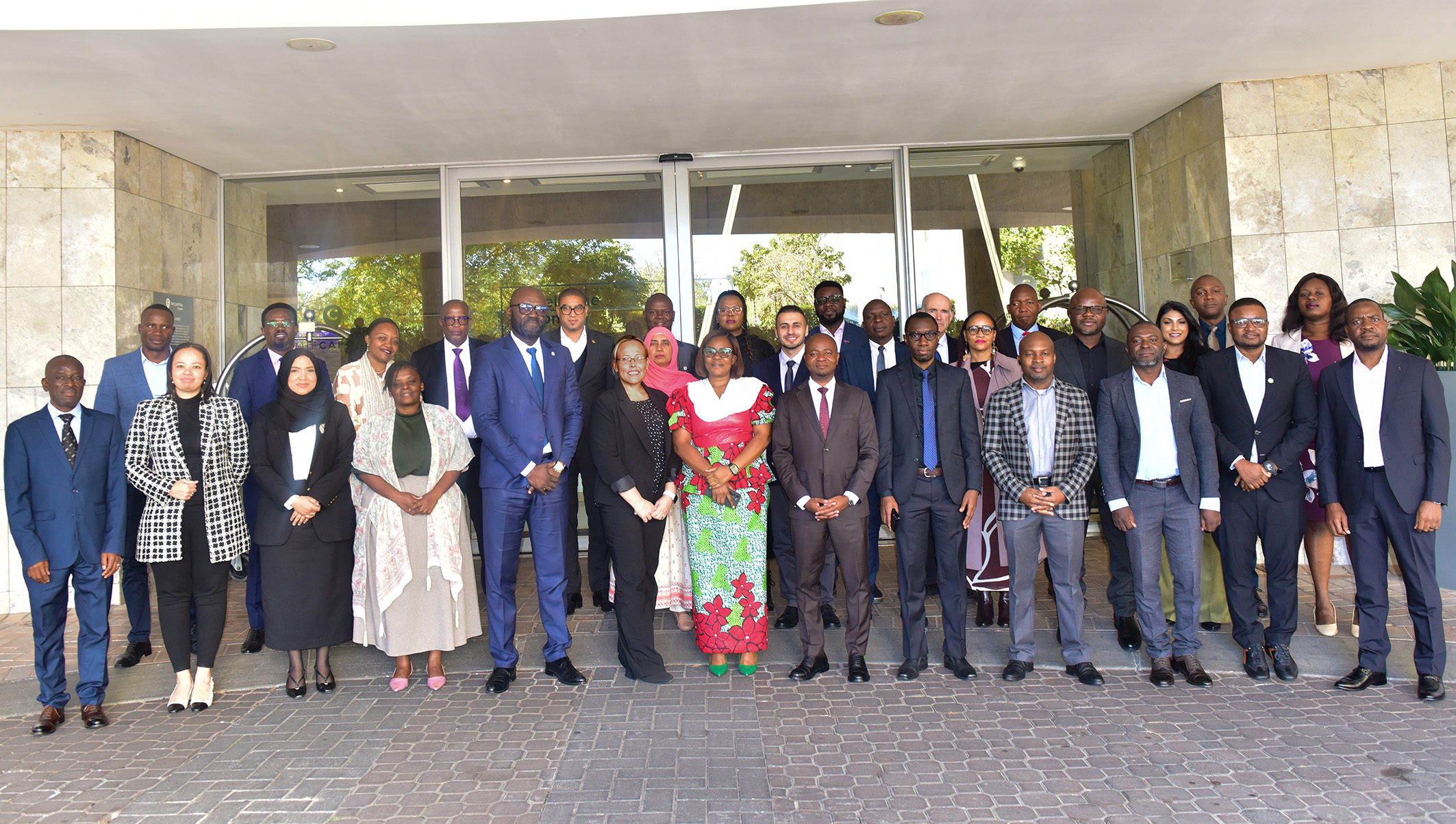
These sentiments were echoed by members of the Southern African Development Community (SADC) Pooled Procurement Services (SPPS) Steering Committee during their ordinary meeting held in Sandton, Johannesburg, Republic of South Africa, from 29 - 30 April 2026. This Steering Committee meeting was convened particularly to get updates on the implementation of SPPS Group Contracting, and deliberate on key strategic issues, including coalition building, supplier mapping and regional manufacturing capacity.
The Steering Committee comprises officials with executive decision-making authority responsible for overseeing the procurement of pharmaceutical and medical commodities in SADC Member States. Since its establishment in July 2025 the SPPS Steering committee was meeting for the third time. The committee’s main function is to provide oversight in the operationalisation efforts of SPPS in the interim. Upon approval of the SPPS Charter by the SADC Council of Ministers, that will allow the establishment of SPPS as an autonomous institution of SADC, the Committee will transition its responsibilities to the new institutional framework.
The meeting was convened with the technical and financial support of the Deutsche Gesellschaft für Internationale Zusammenarbeit (GIZ) and the United Nations Population Fund (UNFPA).
Key areas of discussion were Group Contracting for medicines and SADC Medicines Database, a regional and multi-country procurement approach in which Member States pool their demand for medicines and health products and jointly negotiate with suppliers as a single purchasing bloc under the SPPS framework. This mechanism has the potential to reduce the cost of medicines by up to 40 percent. Beyond cost-efficiencies, SPPS Group Contracting serves as a strategic lever for market shaping. By consolidating regional demand, SPPS creates the necessary economies of scale to incentivise regional sourcing and provide a predictable market for regional manufacturing, thereby directly supporting the SADC Industrialisation Strategy and Roadmap 2015-2063.
SPPS implementation model is supported by the SADC Medicines Database (SMD), an ICT-enabled platform that streamlines procurement processes, facilitates information sharing and supports evidence-based purchasing as part of the rollout of the Group Contracting model.
Ms Marione Schonfeldt, Senior Pharmaceutical Policy Specialist at the Ministry of Health of the Republic of South Africa and Chairperson of the SPPS Steering Committee, underscored the core principles of the SADC region, emphasising unity of purpose, commitment to regional integration, harmonised standards and investment in sustained manufacturing capacity. She further highlighted that solidarity among Member States is essential to advancing equitable access to health, within the broader objectives of social and human development.
She commended the SPPS model as a moral imperative, grounded in the principle that access to safe, effective and affordable medicines is a fundamental human right. She also drew attention to persistent weaknesses in global and regional supply chains, as well as inequities in access to medicines, reinforcing the importance of SPPS as a mechanism to leverage regional sourcing to strengthen regional cooperation and enhance shared health security.
In his welcoming remarks, Dr Lamboly Kumboneki, Senior Programme Officer responsible for HIV/AIDS and representative of the SADC Secretariat, reflected on the progress made since 2014 in advancing discussions towards the operationalisation of SPPS. He noted that this process is positioning the SADC region on a path towards greater self-reliance in the procurement and acquisition of essential medicines, thereby stimulating the growth of the regional pharmaceutical industry and contributing to improved and sustained health outcomes for its population. He expressed confidence in the success of the initiative, highlighting that the approval of the SPPS Charter by the SADC Council represents a critical milestone towards full operationalisation.
Dr Kumboneki also emphasised the significant challenges ahead in ensuring effective implementation, including the complex global geopolitical environment and the uncertain and at times limited support from development partners. Despite these challenges, he stressed the importance of sustained commitment from Member States and stakeholders to ensure successful implementation and the realisation of SPPS objectives.
The meeting reviewed progress on Group Contracting and deliberated on coalition building, supplier mapping and regional manufacturing capacity. It also engaged with the SADC Medicines Database as a key tool for market transparency, harmonisation and evidence-based procurement. In addition, discussions covered the licensing of manufacturers and suppliers, while participants also received a presentation on the SADC Medicines Database (SMD) and undertook a visit to the Gauteng Medical Supplies Depot to gain practical insight into operational systems.
The meeting brought together representatives from SPPS Steering Committee Member States, including Angola, Botswana, the Democratic Republic of the Congo, Eswatini, Lesotho, Madagascar, Mauritius, Mozambique, South Africa, the United Republic of Tanzania, Zambia, and Zimbabwe. Participants also included representatives from the SADC Secretariat, SADC Medicines Regulatory Forum, GIZ, UNFPA, experts from the trade, health and ICT sectors, as well as various cooperating partners.


