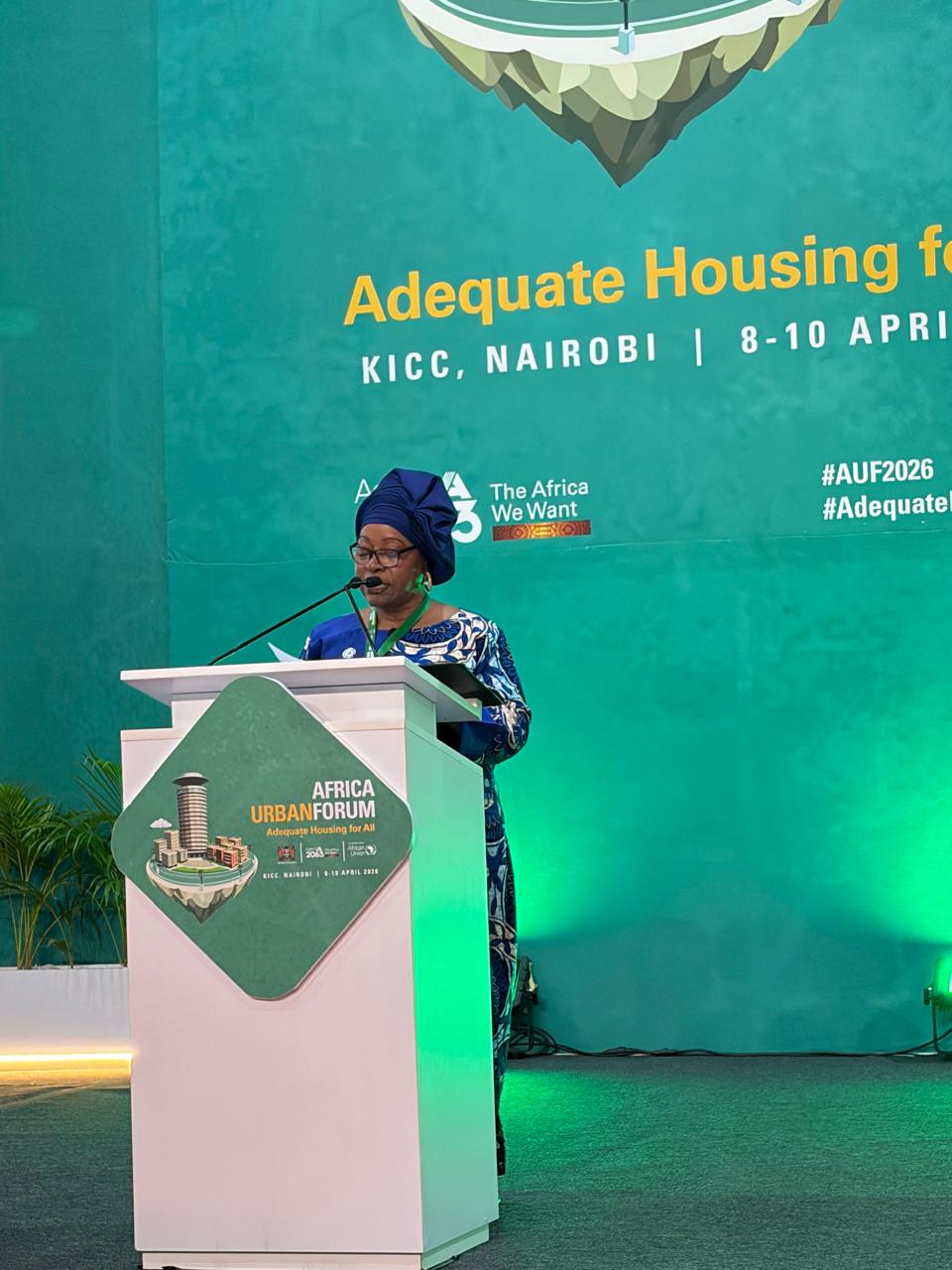
The Southern African Development Community (SADC) Secretariat reaffirmed its commitment to advancing inclusive, resilient, and sustainable urban development during its participation in the Second Africa Urban Forum (AUF2) held in Nairobi, Kenya, from 8 to 10 April 2026.
The SADC delegation was led by Ms Angéle Makombo N’Tumba, Deputy Executive Secretary for Regional Integration, and comprised Ms Nana Dlamini, Acting Head of the Disaster Risk Reduction (DRR) Unit; Dr Pios Ncube, Coordinator for the Disaster Risk Management Strengthening Project (DRMSS); and Ms Sibongile Mavimbela, Senior Programme Officer for Environment and Climate Change.
The AUF2 was convened under the leadership of the African Union Commission (AUC) with support from key partners including United Nations Human Settlement Programme (Un-Habitat), under the theme “Adequate housing for all- Advancing socio-economic and Environmental Transformation towards the realization of Agenda 2063”. The Forum brought together Ministers, policymakers, development partners, and urban practitioners from across the continent to shape Africa’s urban transformation agenda.
At the Forum, SADC made strong and forward-looking submissions, calling for a decisive shift from policy commitments to implementation at scale.
The Secretariat underscored that while urbanization continues to grow across the region, it is increasingly unfolding within the context of climate change, increasing disaster risks, and deepening inequality, particularly in informal settlements. SADC noted that this requires a fundamental transformation in how cities are planned, financed, and managed.
Most importantly, SADC expressed the need to integrate urban planning, infrastructure development, and economic corridors as a foundation for inclusive growth. The region highlighted ongoing efforts to reposition key development corridors, including the North-South, Maputo, Beira, Nacala, and Lobito Corridors as engines of integrated urban and spatial transformation, linking infrastructure investments to housing, service delivery, and local economic development.
On the margins of AUF2, the SADC Secretariat convened a meeting of SADC Ministers responsible for Human Settlements on 10 April 2026. The meeting brought together SADC Ministers responsible for human settlements to provide strategic guidance on the finalization and adoption of the draft Strategy for the Transformation of Informal Settlements. This is an important regional instrument designed to address one of the most pressing challenges facing Southern Africa’s cities.
The Strategy promotes a shift towards inclusive and risk-informed urban development, focusing on in-situ upgrading of informal settlements, improved access to basic services, strengthened land governance, and the prevention of new informal settlements through better planning and housing systems. It also integrates climate resilience and disaster risk reduction as core elements of urban transformation.
SADC Ministers welcomed the strategy as timely and called for:
accelerated implementation of the draft strategy
promotion of Innovative financing mechanisms including blended financing for slums upgrading;
strengthen partnerships with the private sector as well as between infrastructure and local government stakeholders
strengthen coordination and implementation mechanisms for effective governance, accountability and transformation of commitments to action.
DESRI held a bilateral meeting with the AU Commissioner for Agriculture, Rural Development, Blue Economy And Sustainable Environment (ARBE), Mr. Moses Vilakati. Discussions with the African AUC focused on aligning regional efforts with continental frameworks, including Agenda 2063 and the emerging Africa Urban Agenda. Both institutions underscored the importance of coordinated action to address informal settlements, climate risks, and urban governance challenges, while advancing a unified African voice in global urban processes.
The SADC Deputy Executive Secretary also met with UN-Habitat’s Executive Director Under Secretary General Ms. Anacláudia Rossbach. The two organizations reaffirmed the strong partnership under the existing Memorandum of Understanding. The discussions resulted in a shared commitment to:
Scale up the implementation of the SADC Strategy for the Transformation of Informal Settlements;
Advance the rollout of guidelines for mainstreaming disaster risk reduction in urban development;
Strengthen technical cooperation, and joint resource mobilization including climate finance, to support implementation across Member States.


