Toamasina, Madagscar, 28 February 2026: The Southern African Development Community (SADC) Emergency Response Team (ERT) has officially concluded its field deployment in Toamasina, Anatsinanana Region, Republic of Madagascar, following the devastating impact of Tropical Cyclone Gezani, which made landfall on 10 February 2026.
Cyclone Gezani developed over the Indian Ocean and intensified before striking Madagascar’s eastern coastline, bringing heavy rainfall, strong winds, and storm surges that triggered widespread flooding and landslides. The cyclone caused extensive damage to homes, roads, bridges, and other critical infrastructure across 18 districts in five regions. More than 400,000 people were affected, with 62 reported fatalities, 15 missing persons and over 800 injuries recorded.
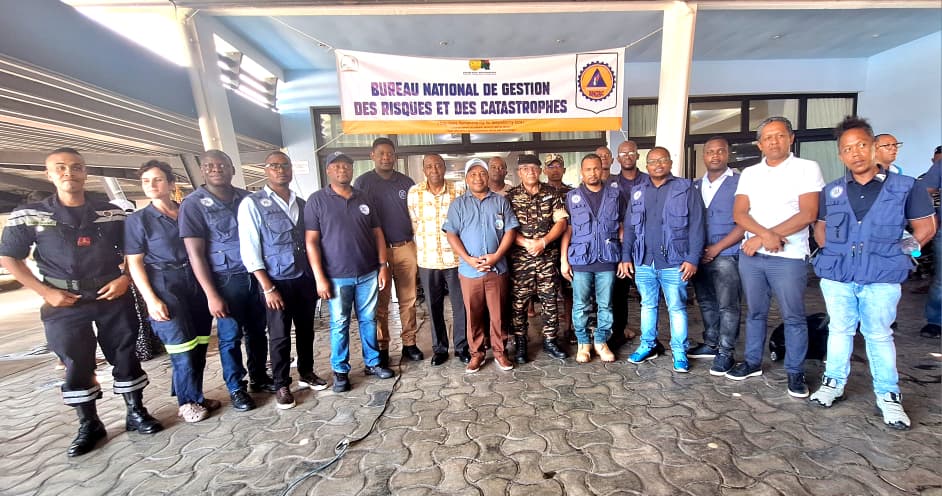
On 18 February 2026, the SADC ERT was formally integrated into Madagascar’s national disaster management authority, the Bureau National de Gestion des Risques et des Catastrophes (BNGRC), the government body responsible for coordinating disaster risk reduction, preparedness, response and recovery efforts across the country. The deployment, which was scheduled to conclude on 28 February 2026, marked the first phase of the humanitarian response aimed at stabilising the situation and facilitating early recovery.
The mission formed part of SADC’s regional disaster response framework, with the team supporting rapid assessments, search and rescue operations, information management, and the provision of technical assistance to affected communities.
Speaking at the conclusion of the mission, Honourable Michael Rafanomezantsoa Manesimanana, Minister of Environment of the Republic of Madagascar, expressed his Government’s appreciation to the SADC family for its timely intervention and technical support during a period of vulnerability and urgent need for additional response capacity. He acknowledged the important role of the regional body in reinforcing national efforts during a critical period and reaffirmed the Government’s commitment to continued collaboration in disaster risk management and recovery planning.
The SADC ERT Leader to the Republic of Madagascar, Mr. Antonio Jose Beleza, thanked the Government of Madagascar for its cooperation and for activating regional humanitarian support mechanisms when needed. He presented key observations from the mission and highlighted recommendations on priority areas requiring further strengthening to fully assist affected communities and restore normalcy. He underscored the importance of conducting a comprehensive Post-Disaster Needs Assessment to determine the full scale of destruction and inform a structured recovery framework that would provide an evidence base for resource mobilisation and prioritisation of interventions.
Both parties emphasised the urgent need to intensify Water, Sanitation and Hygiene (WASH) interventions in communities and schools, improve food security conditions, and expedite the rehabilitation and reconstruction of damaged infrastructure, particularly public facilities, health centres, roads and other critical lifelines.
At the time of the SADC ERT’s departure, the situation had significantly stabilised, with most critical services having resumed, including the reopening of health facilities, reconstruction of infrastructure, restoration of electricity and water supply and food distribution.
The mission was made possible through close collaboration with the MapAction, Rescue South Africa, United Nations Office for the Coordination of Humanitarian Affairs (OCHA), and the United Nations Disaster Assessment and Coordination (UNDAC), which provided technical support. The World Food Programme (WFP) provided financial and logistical support to the deployment.
The mission reflects SADC’s continued commitment to regional solidarity and collective action as Madagascar transitions from emergency response to structured recovery and resilience-building. At the same time, SADC activated internal processes to facilitate access to the Regional Disaster Fund, complementing national and international resource mobilisation efforts in support of the Republic of Madagascar.


