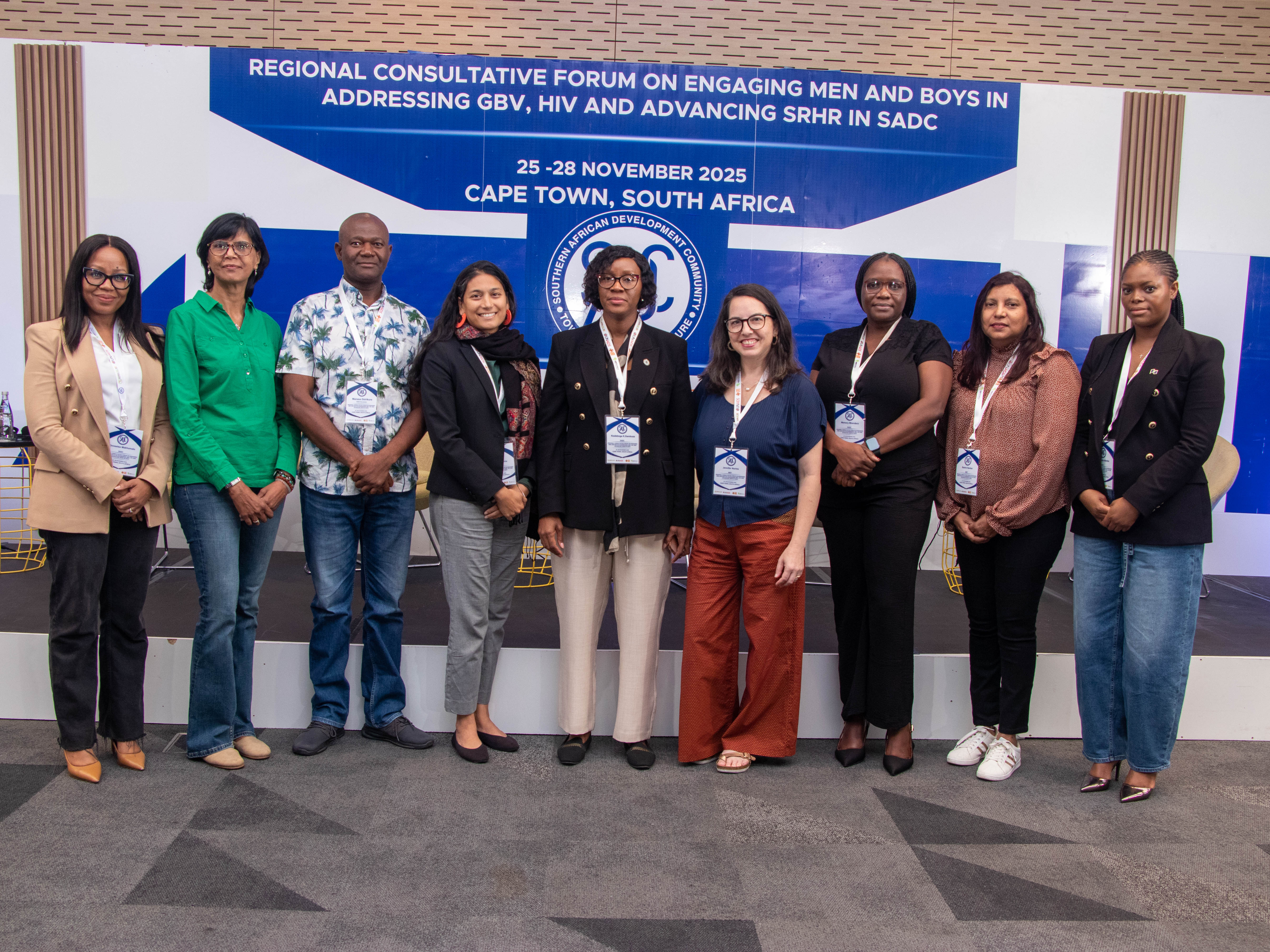
The Secretariat of the Southern African Development Community (SADC) under the African Union Development Agency-NEPAD (AUDA-NEPAD) funded Project, and in collaboration with the Joint United Nations Programme on HIV/AIDS (UNAIDS), UN Women, Miet Africa and Sonke Gender Justice, successfully convened a regional consultative forumin Cape Town, Republic of South Africa, from 25th to 28th November 2025 to discuss and share effective strategies on engagement of men and boys in promoting gender equality, prevention of Gender Based Violence (GBV) and HIV and AIDS and in advancing Sexual and Reproductive Health and Rights (SRHR) outcomes. The workshop was held in Cape Town, Republic of South Africa from the 25th to 28th November 2025.
The overall aim of the forum was to enhance the regional capacity for engaging men and boys as transformative partners in promoting gender equality, preventing GBV and HIV infections, and advancing Sexual and Reproductive Health and Rights (SRHR) outcomes across the SADC region. This Forum contributed to the region's broader agenda to accelerate inclusive socio-economic development and harness the demographic dividend.
The Forum served to specifically enhance understanding and promote evidence-based gender transformative strategies for working with men and boys; facilitate exchange of experiences, good practices and innovative models; and it created a platform for networking and establishing partnerships and collaboration among stakeholders working with men and boys to address GBV, HIV and advance SRHR. The Forum further identified key messages and recommendations to support the work of the SADC Member States, Secretariat and regional stakeholders on addressing underlying factors that perpetuate harmful and discriminatory social and cultural norms and strengthening implementation of the SADC Boys and Young Men Vulnerability Framework.
When delivering the Opening Remarks, Dr Nkhensani Nkhwashu, Executive Manager at South African National AIDS Council (SANAC) Trust, representing Republic of South Africa as the SADC Chair, commendedSADC and its partners for the shared commitment in advancing health, gender equality, and social development across the region.
Dr Nkhwashu highlighted that over the past decade, the SADC region has made significant strides in improving sexual and reproductive health(SRH), with 82% of people living with HIV on antiretroviral treatment, and new HIV infections having declined by 57% since 2010. Maternal and child mortality rates continue to decrease, with ten Member States either meeting or nearing their SDG targets for maternal health and thirteen Member States successfully reduced adolescent birth rates. She further pointed that these achievements reflect the power of well-coordinated policies, strategic investments, and regional cooperation which are aligned to the SADC RISDP 2020-230 and the AU Agenda 2063 and aim to support growth and development ambitions across the SADC Region.
Dr Nkhwashu noted that despite the progress achieved over the year, critical challenges persist as the HIV epidemic remains a serious public health threat, with more than 3000 youth infected by HIV each week.
Ms Anne Githuku Shongwe, UNAIDS Regional Director emphasised that gender inequality, HIV & AIDS and Gender-Based Violence are interconnected emergencies that demand bold action. She noted that recent study by World Health Organization (WHO) revealled that nearly 1 in 3 Women globally has experienced physical or sexual abuse and in Eastern and Southern Africa, up to 46.7% of Women report violence from intimate partner. Ms Shongwe further observed that in high-prevalence settings, intimate partner violence increases a woman’s risk of acquiring HIV & AIDS by approximately 50%.
She said men and boys must be recognised and mobilised not as participants but also as agents of change because when they advocate for gender justice, violence declines, when they uplift their partners, families thrive and when they access HIV & AIDS prevention, communities become healthier.
For his part, Dr Lamboly Kumboneki, Senior Programme Officer for HIV & AIDS at SADC Secretariat also emphasised that over the past decade, the SADC region has made significant strides in improving sexual and reproductive health.
The SADC Secretariat convened the consultative forum as part of commemorating the 16 Days of Activism Against Gender Based Campaign. Ms Kelly Dambuza-Chifani, GBV Programme Officer at the SADC Secretariat Gender Unit, identified that this campaign is a global call against Gender Based Violence and the theme for year 2025 is “Ending Digital Violence Against Women and Girls”. She further highlighted that addressing all forms of violence against women and girls requires inputs and action from both men and women, boys and girls. Therefore, SADC found this Campaign period to be the opportune time to elevate the regional voice and action on working together with men and boys to promote gender equality, prevent GBV and HIV, and advance SRHR outcomes across the SADC region.


