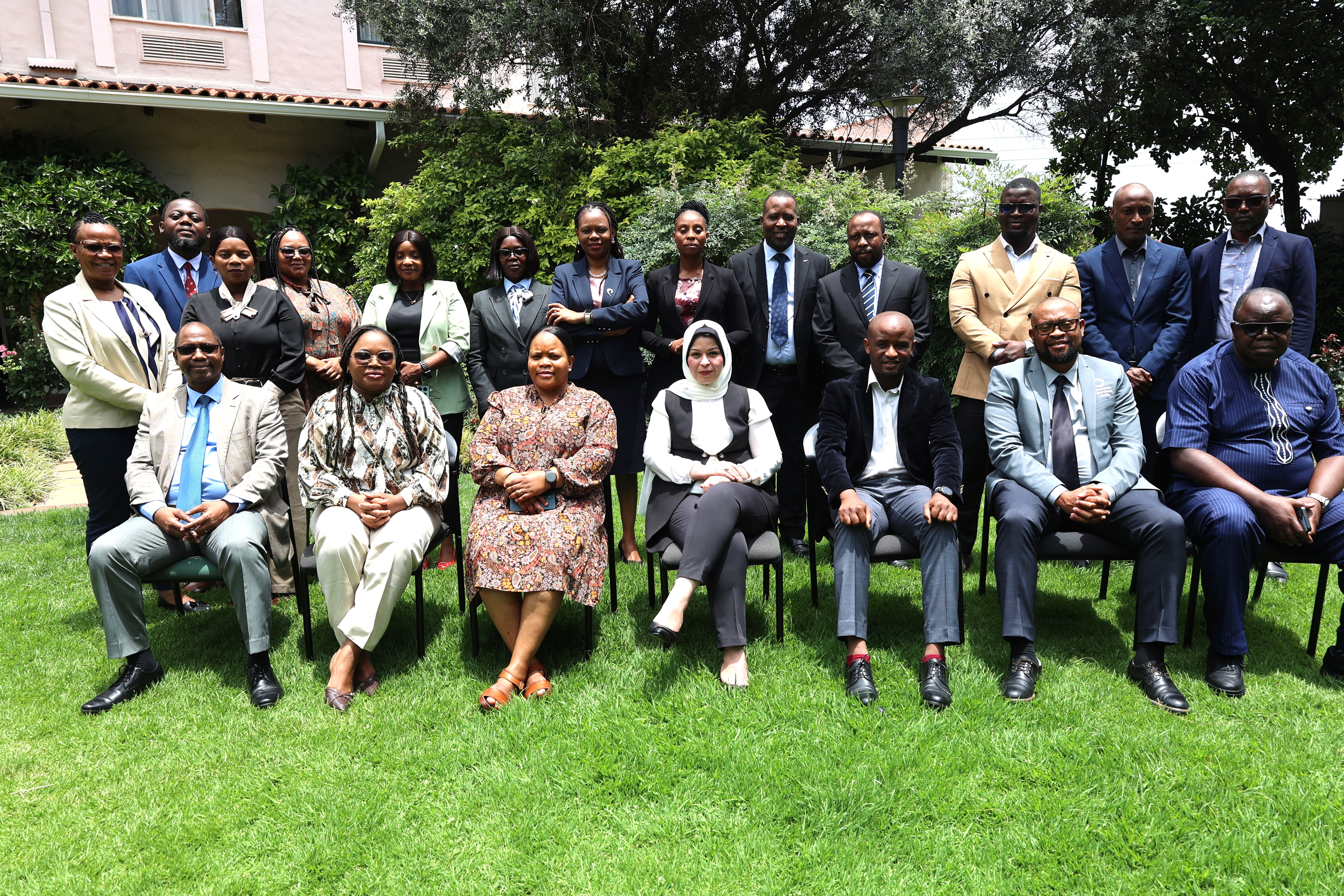
Partner and Member States of the Common Market for Eastern and Southern Africa (COMESA), East African Community (EAC) and Southern African Development Community (SADC) on 27-28 November 2025 reviewed the Tripartite Simplified Trade Regime (TSTR) Framework in preparation for its validation and adoption scheduled for 2026.
The meeting held in Johannesburg, South Africa, built on the consultative meeting held on 24–25 November 2025 with Informal Cross-Border Traders (ICBTs) where women, youth, and cross-border associations contributed their insights on the TSTR Framework, drawing on the practical challenges they face in cross-border trade.
Ms. Mai Mohamed Ezzat Ali Ramadan, Trade Policy Analyst in the Ministry of Investment and Foreign Trade of Egypt, the current Chair of the COMESA-EAC-SADC Tripartite chaired the consultative meeting with Partner and Member States
The facilitator of the meeting, Mr. Rangarirai Machemedze, Coordinator of the Tripartite Simplified Trade Regime Project based at the SADC Secretariat, hailed the outcomes of the consultative meetings, noting that the meetings brought to light key issues faced by cross-border traders that need to be taken on board in the TSTR Framework.
"We look forward to the validation of the framework so that it becomes a living document that can be used in the Tripartite area," Mr. Machemedze said at the conclusion of the meeting.
He highlighted that Partner/Member States generally agreed with many of the suggestions put forward by informal cross border traders, particularly women and youth, a clear indication of the need to take on board the issues to address the challenges faced by traders and to promote inclusive economic growth.
On her part, the Director of Customs and Trade at the EAC Secretariat and Chairperson of the Tripartite Task Force, Ms. Flavia Busingye, thanked the participants for the contributions which will strengthen TSTR Framework and ensure that it addresses the needs of the cross border traders such as reducing gender-based violence, facilitating easy movement of goods, reducing barriers to trade and enhancing inclusive economic growth across the COMESA-EAC-SADC Tripartite area.
Ms. Busingye called on the participants to sustain the momentum generated during the discussions in preparation for the validation of the Framework early 2026. She also expressed gratitude to the Alliance for Green Revolution in Africa (AGRA) for the support towards the convening of the consultative meetings and overall support to the Tripartite Simplified Trade Regime Project.
The AGRA Senior Specialist for Food Trade Policy, Mr. Protase Echessah, pledged his organisation’s continued support to the regional integration agenda and inclusive economic development of the Tripartite, which are central objectives of the TSTR Framework.
During the meeting, Partner/Member States of the COMESA-EAC-SADC Tripartite discussed the objectives and rationale, the legal framework, and the key features and components of the Tripartite STR Framework. They reviewed relevant documents within the Framework, including the Simplified Certificate of Origin, Simplified Customs Declaration, and other supporting materials. The discussion also covered a Common List of Eligible Products, institutional arrangements for implementing the Framework, and national implementation requirements.
Over the past twenty years, COMESA, EAC, and SADC have each implemented Simplified Trade Regimes tailored to their regional priorities and contexts. These regimes have emerged as essential administrative tools to facilitate low-value cross-border trade, with a particular focus on small-scale traders. Building on these regional experiences, the three Regional Economic Communities (RECs) have jointly developed a Tripartite STR Framework that consolidates best practices and lessons learned from their respective regimes.
Once adopted, the TSTR Framework will simplify customs procedures, reduce trade costs, and enhance participation of small-scale traders, particularly women and youth, in regional trade.


