
In June 2025, the Committee of Ministers of Trade (CMT) approved Angola’s accession to join the SADC Free Trade Area (FTA) with an indicative date to start the implementation in January 2026. The CMT also approved a series of capacity-building activities, including the electronic certificate of origin (e-CoO), as part of the preparation for readiness for Angola to implement the SADC FTA smoothly. The SADC certificate of origin is documents which attest the origin of the goods when is trading in the region to benefit from Quota-Free and Duty-Free market access as per the provisions of the Protocol on Trade.
The SADC have developed the certificate of origin in electronic format to facilitate trade, and the Framework was approved by the Committee of Ministers of Trade in June 2019, for the implementation of the concept. The Framework presents a set of procedures for the harmonisation of certificate origins across the region, and the official launch was in September 2022 in Blantyre, Malawi. A Backstopping mission to sensitise, train, and assess the customs electronic system for Angola was held from 27 to 31 October 2025 in Luanda. the mission objectives were to:
develop a work plan that will assist in expediting the development of the e-CoO and implement the concept;
identify the resources required (Hardware and Software infrastructure); and
Identify the legal issues that will need to be addressed for the implementation of the e-certificate of origin.
In his opening remarks Mr. Alcides Monteiro, the Senior Programme Officer, Customs at the SADC Secretariat underscored the importance of mission to support Angola to expedite the implementation of the SADC e-CoO in preparation for the starting trading under the SADC Free Trade Area (FTA).
He further indicated that the e-CoO is part of the trade facilitation instruments in which currently 8 Member States have already migrated from the manual to an electronic environment, and this forms part of the SADC vision, as the instrument is included in the SADC Trade Facilitation Programme approved by the Ministerial Task Force on Regional Economic Integration. He finally urged the stakeholder to devote their time to explore what the e-CoO concept entails and the need to expedite the development of the modules as well as cascading the knowledge acquired. Mr. Monteiro also expressed gratitude for the support from the German Development Cooperation, represented by GIZ, Cooperation for the Enhancement of SADC Regional Economic Integration (CESARE) Programme, for contributing for the e-CoO backstop mission in Angola and other activities.
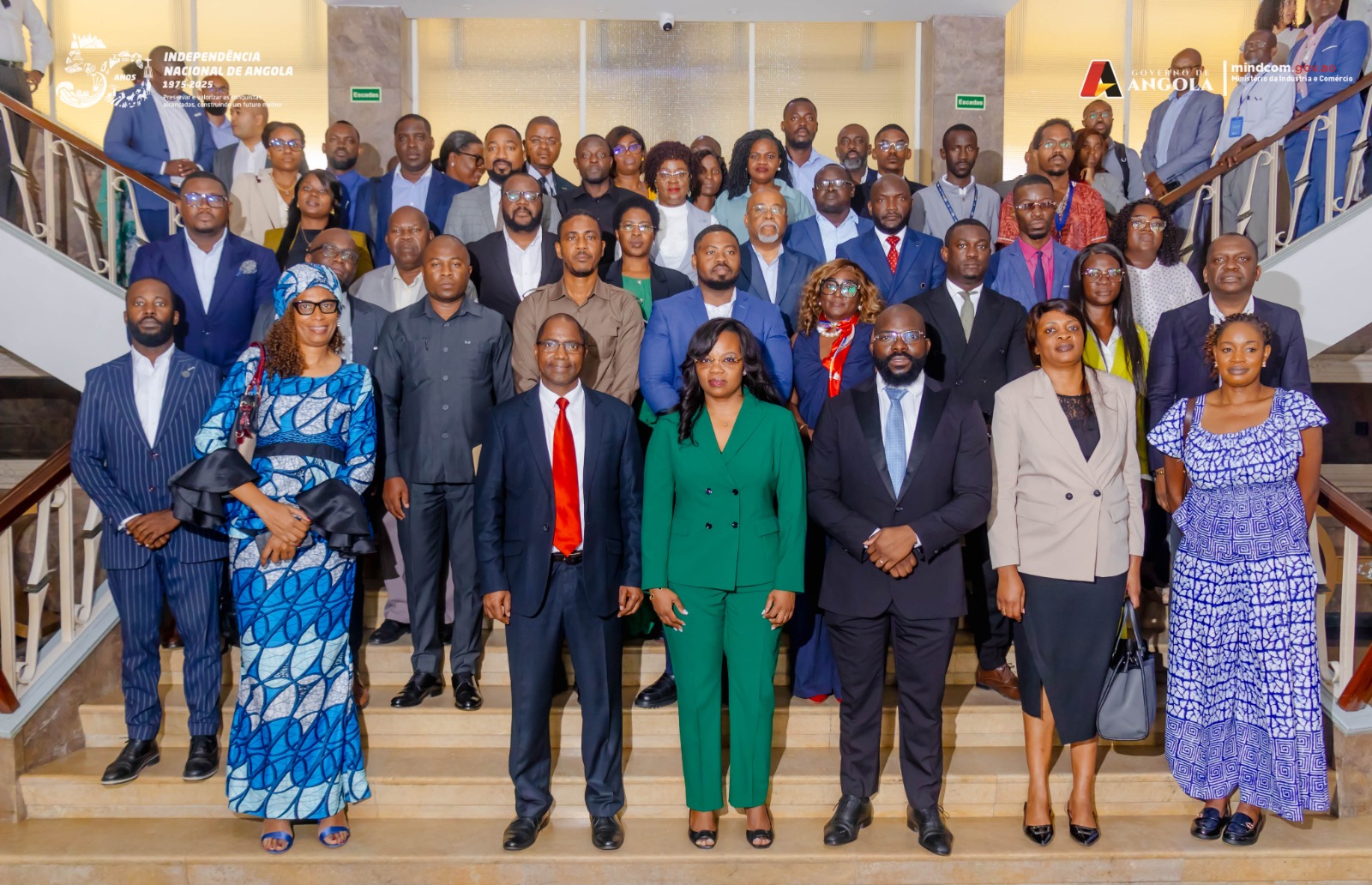
The mission was formally opened by Dr. Anatolio Domingos, the Director of International Trade Affairs at the Ministry of Commerce and Industry of Angola. In his remarks, Dr. Domingos welcomed the participants and expressed gratitude to the Secretariat for its efforts to assist Angola in implementing the SADC Protocol on Trade through the automation of the certificate of origin, which seeks to support and facilitate intra-regional trade flows.
He stressed the advantages of automation, innovation, and modernisation of processes by implementing the electronic certificate of origin and improving the efficiency of customs declarations.
Dr Domingos further indicated that the ideal scenario could be for Angola to start implementing the e-CoO on the first day of the SADC Free Trade Area; however, effort will be needed to expedite the process to finalise the e-CoO in the course of 2026.
The mission was also honoured by the presence of Hon. Dr. Agusta Fortes the Secretary of State for Commerce and Services in the Ministry of Industry and Commerce, who managed to make time in her busy schedule and came to address the participants on the commitment of Angola on the Regional Integration Agenda and the implementation of the Free Trade Area.
The mission enabled stakeholders to be acquainted with the SADC e-CoO and its benefits for trade facilitation, and also examined various options that may be cost-effective for Angola to implement the e-CoO concept expeditiously.


