By Jyoti Tewari, Regional Health Systems Advisor, UNFPA for East and Southern Africa, Lamboly Kumboneki, Senior Programme Officer, Southern African Development Community (SADC), and Sandra Aslund, Program Advisor, Delegation of the European Union to the Republic of Botswana and SADC.
Somewhere in southern Africa today, a woman will give birth. The baby will cry, the mother will smile, and then, silently, the bleeding will start.
The midwife attending to her will know exactly what to do. But when she opens the clinic’s medicine drawer, the oxytocin may have lost its potency because the rural clinic's refrigerator broke down two days ago. Or perhaps she needs to administer tranexamic acid (TXA) to stop the bleeding, but her country's policies prohibit a midwife from giving that life-saving drug.
The mother will bleed to death. And we will call it a tragedy. But let us be completely honest: it is not just a tragedy. It is a systemic failure of the health care delivery system.
Postpartum haemorrhage (PPH) or excessive bleeding after childbirth is the leading cause of maternal mortality in sub-Saharan Africa, responsible for nearly one-third of all maternal deaths in the region. In 2023 alone, nearly 180,000 mothers died across the continent. Behind these statistics are broken families, orphaned children, and devastated communities.
What makes these deaths so uniquely agonizing is that they are preventable.
The region has made important gains with more women accessing antenatal care and more births attended by skilled providers. Countries have demonstrated strong political will to improve maternal and newborn health. But coverage alone is not enough. A woman can reach a health facility and still face danger if that facility lacks quality medicines, trained providers, or policies and evidence-based guidelines needed to deliver timely, quality care.
So why are women still dying? One of the reasons is that the gap between global guidelines and practice in the delivery room is dangerously wide.
This is why the conversation must move beyond access and focus on quality, evidence-based policies and guidelines, financing, and resilience of health care delivery systems.
Our current approach to adopting these life-saving tools is fragmented and slow. It is hindered by policy and regulatory delays, inadequate financing and supply chain challenges. In many settings, outdated policies and restrictive scopes of practice prevent frontline providers, such as midwives standing at the bedside, from administering the care they are trained to provide.
We know what works. Proven, affordable interventions exist to prevent and treat postpartum haemorrhage. The challenge is ensuring these tools move from evidence into practice guides for improving routine, everyday care. That requires connecting policy and regulatory decisions, supply chains, clinical guidelines and health worker training so that solutions reach every delivery room, not just some.
For governments, this also means investing in the frontline health providers at the centre of care, such as midwives. A midwife empowered with the right training, authority, equipment, and supplies can be the difference between life and death. Countries must continue strengthening training, supportive supervision, and the policies that allow frontline health workers to provide the full package of life-saving care for which they are trained.
This is a shared responsibility. Through partnerships between governments, UNFPA, SADC, and the European Union, work is already underway to remove the barriers preventing women from accessing life-saving care and to strengthen the health policy, regulatory and delivery systems around them. But goodwill and good partnerships are not enough on their own. They must be matched with sustainable domestic financing for comprehensive sexual, reproductive, maternal, neonatal, child and adolescent health, political will, and accountability at every level, regional, national and local.
The future we want is one where a woman’s chance of survival does not depend on where she lives, the facility she reaches, or whether a critical medicine happens to be on the shelf that day. It requires governments to prioritise it, institutions to deliver it, and all of us, partners, decision makers and communities, to facilitate and demand it.
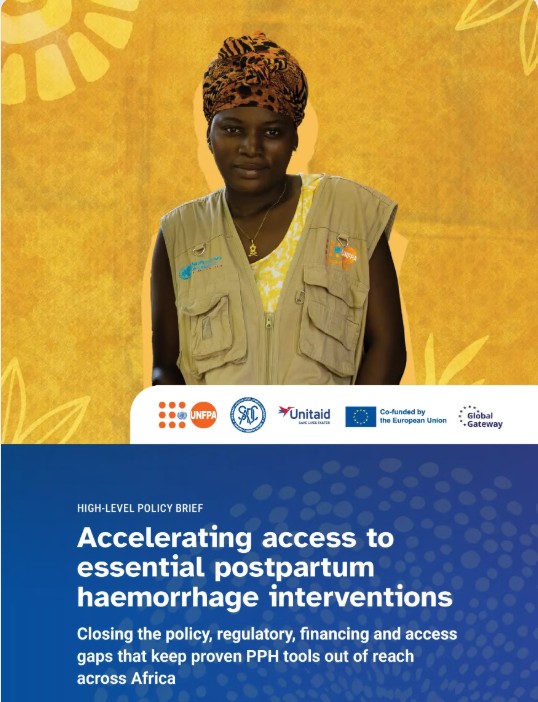
Today’s launch of our policy brief “Accelerating Access to Essential Postpartum Haemorrhage Interventions” is a call to action to close the gap between policy and practice, to support systems that protect lives, and to do that now, so that every woman and girl in the SADC region can survive childbirth, recover with dignity, and thrive.
| Attachment | Size |
|---|---|
| High-Level Policy Brief Accelerating Access to Essential PPH Interventions (1).pdf (3.01 MB) | 3.01 MB |


