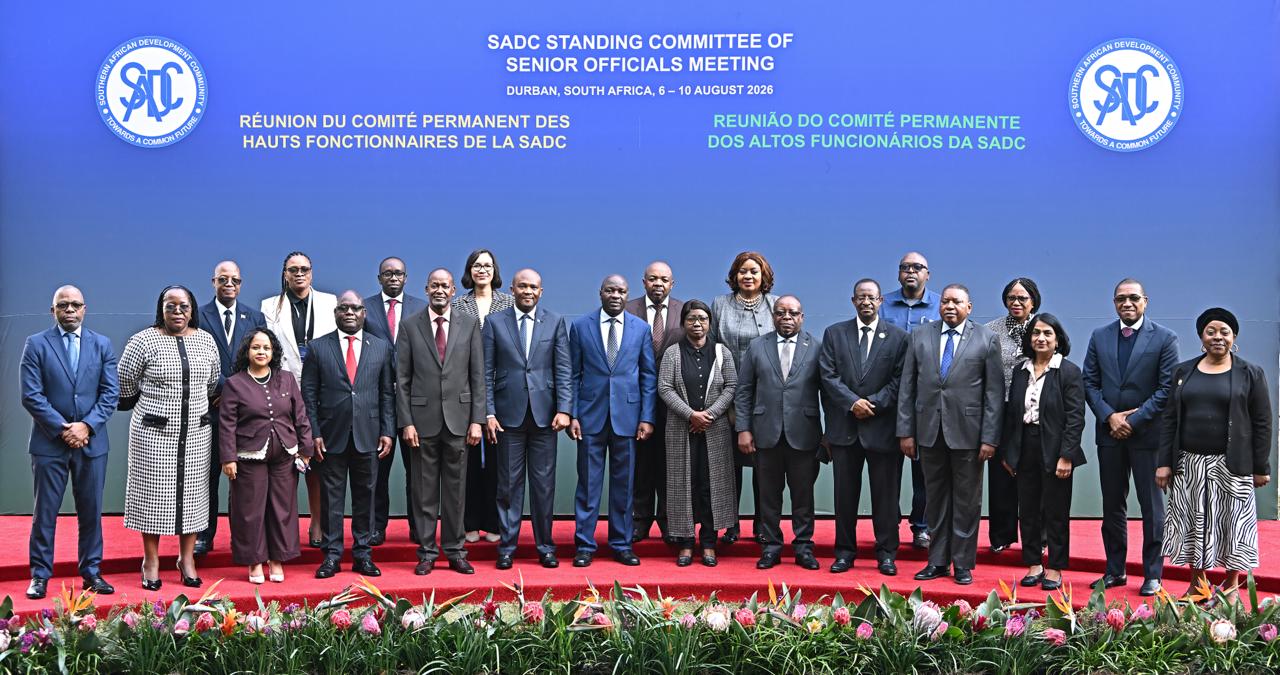
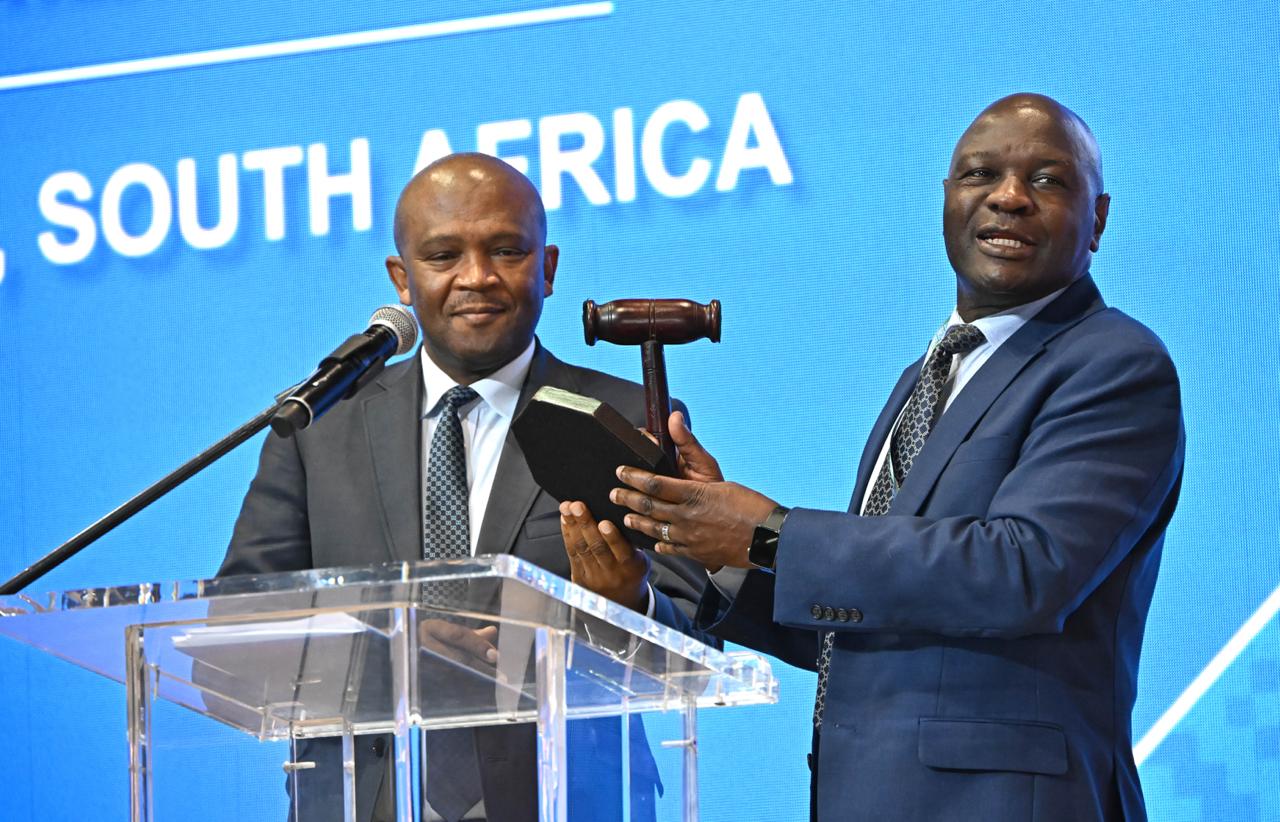
The Republic of South Africa has formally assumed the Chairship of the Southern African Development Community (SADC) Standing Committee of Senior Officials for the period August 2026 to August 2027, with reaffirmation of South Africa’s commitment to deeper integration, sustainable development, peace, security, and economic development.
The assumption of South Africa as the SADC Chair of the Senior Officials took place on 6th August 2026 at the opening of the meeting of the SADC Standing Committee of Senior Officials Meeting, convened ahead of the 46th Ordinary SADC Summit of SADC Heads of State and Government in Durban, KwaZulu-Natal Province.
In his acceptance speech, Ambassador Tebogo Seokolo, Deputy Director-General for Africa in the Department of International Relations and Cooperation, expressed gratitude to Member States for the confidence placed in South Africa and reaffirmed the country's commitment to advancing the principles and aspirations embodied in the SADC Treaty, Vision 2050, and the Regional Indicative Strategic Development Plan (RISDP) 2020-2030.
Ambassador Seokolo noted that, while South Africa had served as Interim Chair during a challenging period for the organisation, the formal assumption of the substantive Chairship demonstrated the resilience of SADC institutions and the Community's capacity to maintain continuity in the face of unforeseen circumstances.
He paid tribute to Zimbabwe for its solidarity and leadership in helping in sustaining the organisation's work during the transition period and acknowledged Zambia's important role as part of the SADC Troika in supporting regional progress.
He highlighted the complexity of the regional environment, citing geopolitical uncertainty, economic volatility, climate-related shocks, public health challenges, and evolving peace and security threats as issues requiring collective responses.
Reaffirming SADC's commitment to economic transformation, he stressed that industrialisation remains central to the region's ambitions to create jobs, increase production, and expand intra-regional trade. These efforts, he said, must be complemented by investments in infrastructure, energy security, food and nutrition security, climate resilience, public health, gender equality, youth empowerment, and institutional strengthening.
Reflecting on SADC's history spanning more than four decades, Ambassador Seokolo described the regional bloc as a symbol of solidarity, collective self-reliance, and cooperation. He called on Member States to preserve this legacy while preparing the organisation to respond effectively to emerging opportunities and challenges.
In his remarks, the Outgoing Chairperson of the Standing Committee of Senior Officials and Permanent Secretary in Ministry of Foreign Affairs and International Trade of the Republic of Zimbabwe, Ambassador Albert Ranganai Chimbindi, commended South Africa for its stewardship during the interim period and for ensuring continuity in the work of SADC.
Ambassador Chimbindi commended Member States for the significant progress achieved in implementing regional programmes over the past year, noting that such achievements were made possible through the collective dedication and commitment of Member States to advancing the SADC regional development agenda.
Ambassador Chimbindi underscored the continued importance of peace, security, and good governance as key foundations for sustainable development and shared prosperity across the region. He highlighted ongoing efforts to support the restoration of lasting peace in the eastern Democratic Republic of Congo and the consolidation of peace in Madagascar as priorities for SADC.
He also emphasised the need to increase intra-regional trade and accelerate industrialisation and regional value chain development to strengthen economic resilience amid global geopolitical and economic uncertainties. He urged Member States to remove tariff and non-tariff barriers and focus on high-impact priority projects that advance regional integration.
Ambassador Chimbindi reaffirmed Zimbabwe's commitment to supporting the region's collective vision of "The SADC We Want," stressing that the realisation of that vision requires deliberate and sustained effort from all Member States.
SADC Standing Committee of Senior Officials, consisting of permanent secretaries or officials of similar rank in the SADC Member States, serves as the technical advisory committee to the Council of Ministers. The deliberations of the Senior Officials will feed into the agenda of the SADC Council of Ministers and Summit of Heads of State and Government scheduled for 12-14 August and 17th August 2026 in Durban, South Africa respectively.
| Attachment | Size |
|---|---|
| HANDOV~1.PDF (218.64 KB) | 218.64 KB |
| Opening Remarks by Ambassador Seokolo, Chairperson of the Standing Committee of Senior Officials, 6 August 2026.pdf (146.39 KB) | 146.39 KB |