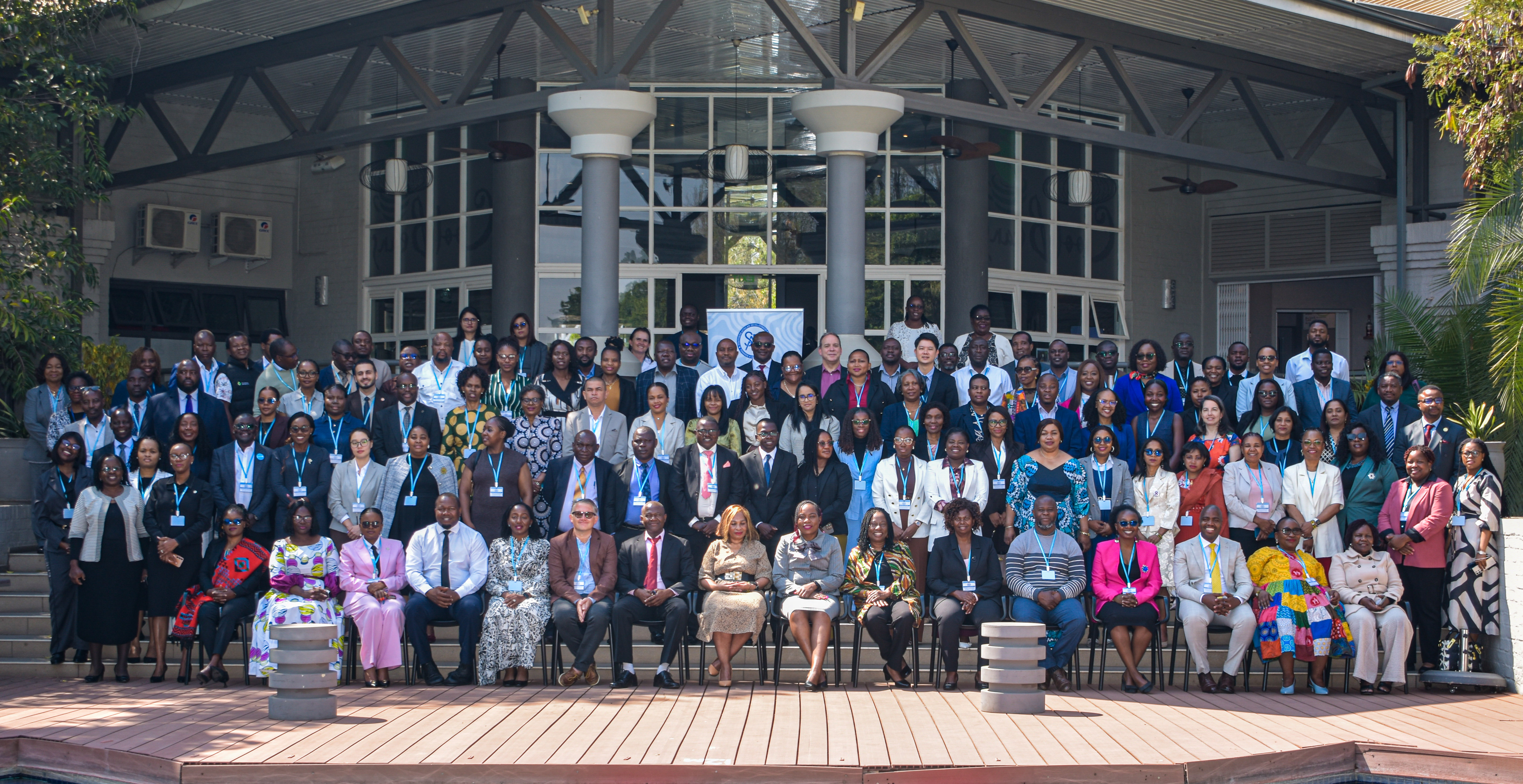
The Southern African Development Community (SADC) Regional Meeting to Accelerate Implementation, Monitoring and Reporting of the Sexual and Reproductive Health and Rights (SRHR) Strategy 2019-2030 officially opened on 31st August 2026 in Harare, Republic of Zimbabwe. Held under the theme, “Accelerating Implementation, Monitoring and Reporting of the SADC SRHR Strategy 2019-2030,” the meeting brings together Senior SRHR Programme Managers, Monitoring and Evaluation Specialists, Human Resources experts and strategic partners from across the region. The meeting seeks to strengthen implementation, monitoring, reporting and accountability to ensure that regional commitments translate into measurable results.
The official opening session featured welcome remarks by Dr Lucia Gondogongwe, Deputy Director for Reproductive Health in the Republic of Zimbabwe’s Ministry of Health and Child Care. Ms Thembi Zulu, Deputy Director for Women’s Health at the Ministry of Health of the Republic of South Africa and Chairperson of the meeting, officially opened the meeting. She underscored the need for renewed commitment and collective action to translate regional SRHR commitments into measurable results.
In her opening remarks, Ms Zulu noted that the SRHR agenda is being implemented against a backdrop of declining external financing, geopolitical competition and increasing pressure on national budgets. She emphasised that SRHR must become an integral part of resilient, nationally owned and regionally connected health systems rather than remain a parallel programme dependent on temporary funding cycles. She stressed that the challenge facing the region is no longer primarily the availability of strategies, but ensuring effective implementation and accountability.
Ms Zulu called for a stronger focus on implementation by ensuring that regional commitments translate into clear national actions, responsible institutions, measurable milestones, financing pathways, credible indicators and effective reporting mechanisms. She emphasised the importance of being able to identify who is responsible for delivering specific commitments, by when, with what resources and how results will be measured. This, she noted, is essential to strengthening implementation discipline and ensuring that commitments translate into tangible outcomes for communities.
She further called for a transformation of monitoring and evaluation from a reporting function into a source of strategic intelligence for decision-makers. She emphasised that data should enable Ministers, policymakers and programme managers to identify where progress is being made, where gaps persist, which populations are being left behind and where resources should be redirected. The objective, she noted, should be to move from data collection to data intelligence and from reporting compliance to performance accountability.
Ms Zulu also highlighted the need to apply a stronger equity lens in monitoring the implementation of the SRHR Strategy. She noted that regional and national averages can mask significant disparities at sub-national and community levels, particularly among women, girls and adolescents who may face barriers to accessing essential services. She therefore called for data that can identify inequalities by geography, age, sex, socioeconomic circumstances and other relevant dimensions of vulnerability.
She emphasised that SRHR must be protected from fragmentation by strengthening its integration across broader health systems and programmes. This includes primary health care, universal health coverage, adolescent and youth health, HIV services, maternal and newborn health, mental health, gender-responsive health systems and broader health-system strengthening. She stressed that SRHR cannot remain an island within the health system but must form part of the architecture of the health system itself.
Against the backdrop of declining external financing, Ms Zulu called for stronger regional cooperation and greater African ownership of the SRHR agenda. She encouraged Member States to explore opportunities for domestic and collective financing, joint procurement, shared digital infrastructure, technical expertise, harmonised indicators and reporting systems, and increased learning among countries. She also emphasised the importance of ensuring that external partnerships increasingly support regional priorities and national systems rather than creating parallel structures.
Ms Zulu further called on the region to prepare for emerging SRHR challenges rather than focusing solely on measuring those already known. She highlighted the potential impact of climate change, migration and mobility, urbanisation, demographic change, digital technologies, and geopolitical and economic shocks on access to SRHR services and health outcomes. She emphasised the need for a future-ready monitoring architecture capable not only of documenting what happened, but also of helping the region anticipate and respond to what lies ahead.
Also speaking during the opening session, Dr Markus Larsson, Programme Specialist for SRHR at the Embassy of Sweden, and Dr Manase Dzirikure, SADC Secretariat Coordinator for SRHR, highlighted priorities for advancing the regional SRHR agenda. Dr Dzirikure said that, this meeting is the engine for implementing the decisions taken by the SADC Ministers of Health and HIV in February 2026, with the objective of the week being to design concrete implementation roadmaps, ensuring that the delegates can clearly report measurable progress when the Ministers reconvene in November 2026. Dr Dzirikure said that the meeting is guided by the SADC Day 2026 message by the SADC Chairperson, His Excellency the President of the Republic of South Africa Matamela Cyril Ramaphosa said that, SADC’s true progress is measured by the lived experiences of its citizens. For the Secretariat, this mandates a shift in our operational culture moving from recurring declarations towards Reflective Planning and Execution.
Over the next four days, delegates will review progress in implementing the SADC SRHR Strategy 2019-2030 while exchanging experiences, innovations and lessons learned. The discussions are expected to contribute to stronger regional coordination and practical actions for accelerating implementation of the Strategy.
The meeting is convened in collaboration with United Nations agencies under the Implementing Together for SRHR initiative, namely the Joint United Nations Programme on HIV/AIDS (UNAIDS), United Nations Population Fund (UNFPA), United Nations Children’s Fund (UNICEF), and World Health Organization Regional Office for Africa (WHO AFRO). The initiative is supported by the Regional SRHR Team of Sweden and the European Union, reflecting a shared commitment to advancing sexual and reproductive health and rights across Southern Africa. This collaboration underscores the importance of sustained partnerships in supporting Member States to strengthen SRHR systems and improve health outcomes.
The opening day also featured presentations and knowledge-sharing sessions by Member States and development partners, including updates on the SafeBirth Africa Project, AUDA-NEPAD, and the SADC-WHO-AfDB collaboration on health systems strengthening. These engagements provided an opportunity to share experiences, highlight emerging priorities and identify opportunities for strengthened collaboration. The discussions further reinforced the importance of evidence-based approaches and coordinated action in advancing the region’s health agenda.
The meeting reaffirms the shared commitment of SADC Member States and partners to translating the SRHR Strategy 2019-2030 into measurable action, stronger accountability and improved health outcomes. It provides an opportunity to strengthen regional cooperation and ensure that SRHR remains firmly integrated within resilient, equitable and sustainable health systems. Ultimately, the meeting seeks to contribute to ensuring that the commitments contained in the Strategy translate into meaningful improvements in the lives and health of communities across Southern Africa.


