
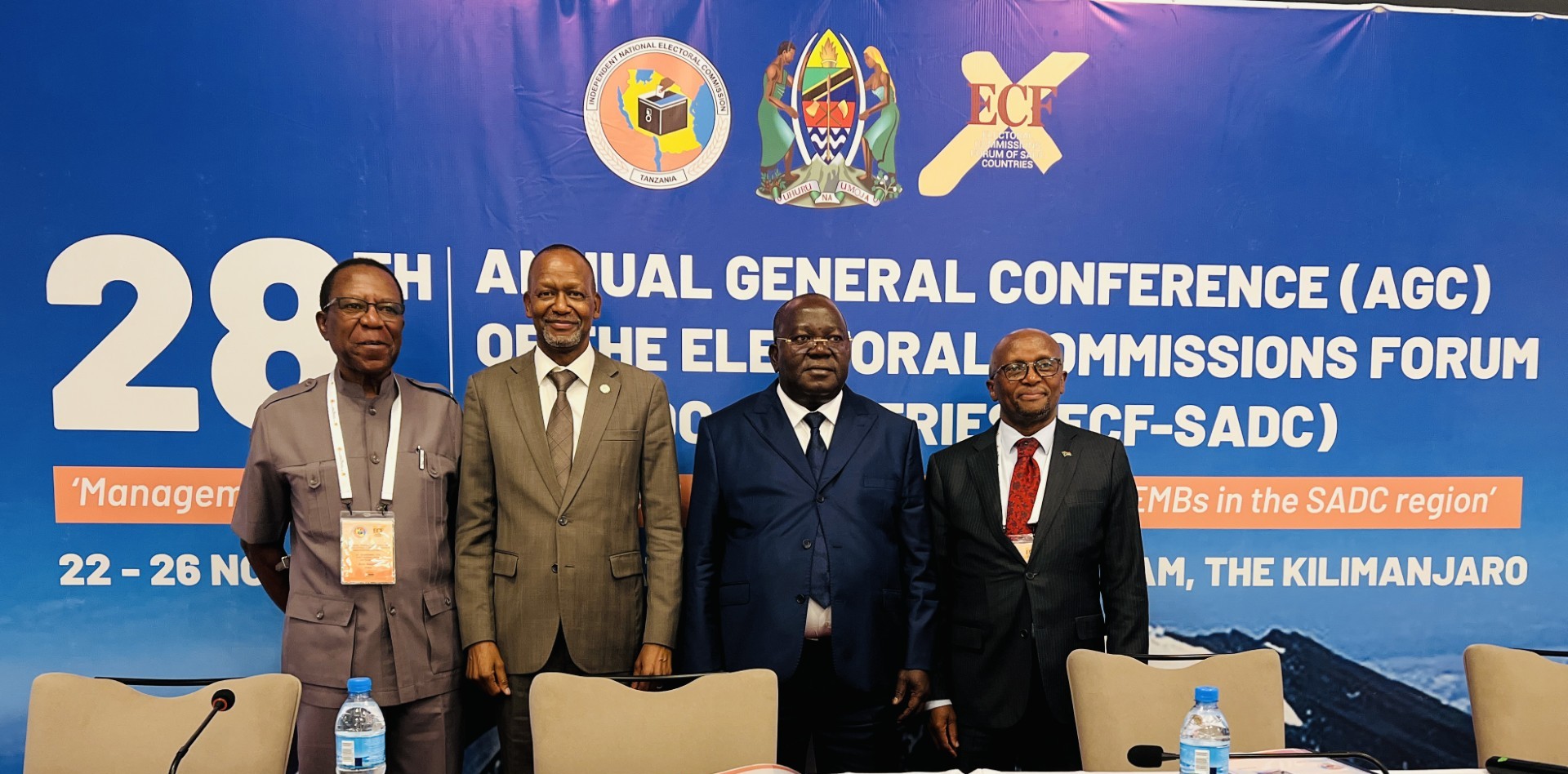
The Southern African Development Community (SADC) has called for stronger and adequately resourced Electoral Management Bodies (EMBs) to address emerging challenges, including electoral violence, misinformation, artificial intelligence (AI), and evolving political dynamics, with a view to safeguarding democratic governance across Southern Africa.
Addressing the 28th Annual General Conference of the Electoral Commissions Forum (ECF) on 24 November 2026 in Dar es Salaam, United Republic of Tanzania, SADC Executive Secretary, His Excellency Mr. Elias M. Magosi, reaffirmed SADC's commitment to promoting peaceful, credible, transparent, and inclusive elections as a cornerstone of regional peace, stability, and sustainable development.
H.E. Magosi noted that SADC had deployed the SADC Electoral Observation Mission (SEOM) to ten national elections conducted across the region over the past three years, underscoring the organisation's continued commitment to supporting Member States in implementing the SADC Principles and Guidelines Governing Democratic Elections and strengthening democratic governance.
The conference has brought together representatives of 14 Electoral Management Bodies (EMBs) from across the SADC region, alongside key electoral stakeholders, to exchange experiences, share best practices, and discuss emerging issues in electoral governance and democracy.
While commending Member States for the peaceful conduct of most elections during the period, the Executive Secretary expressed concern over isolated instances of electoral violence that resulted in the loss of life. He emphasised the importance of ensuring that elections remain peaceful democratic processes through which citizens freely exercise their constitutional and democratic rights.
H.E. Magosi further observed that coalition governments are becoming an increasingly prominent feature of the political landscape in several Member States, highlighting the importance of robust constitutional, legal, and institutional frameworks to support effective and sustainable governance arrangements.
The Executive Secretary also highlighted the growing role of technology in election management, noting its potential to enhance the efficiency, transparency, accessibility, and credibility of electoral processes. He cited the experiences of Angola and South Africa as examples of Member States that have successfully leveraged advanced election management systems to strengthen electoral administration and build public confidence.
He encouraged EMBs to harness the potential of artificial intelligence while strengthening safeguards and enhancing their capacity to address misinformation and disinformation on social media.
The Executive Secretary underscored the importance of preserving the independence, credibility, and public trust of EMBs and called for sustainable approaches to electoral financing in response to increasing financial pressures facing electoral institutions across the region.
To further strengthen electoral governance, H.E. Magosi encouraged the Electoral Commissions Forum to prioritise the development of capable and independent EMBs, promote research and knowledge-sharing on emerging technologies, and strengthen peer learning among electoral institutions across the region.
He also highlighted ongoing SADC initiatives aimed at enhancing collaboration among key electoral stakeholders and reaffirmed the Secretariat's commitment to supporting Member States throughout the electoral cycle through technical assistance, dialogue, and capacity-building initiatives.
H.E. Magosi expressed confidence in the region's continued democratic progress and reaffirmed SADC's commitment to working with the Electoral Commissions Forum to advance electoral integrity, peace, stability, and prosperity across Southern Africa.


