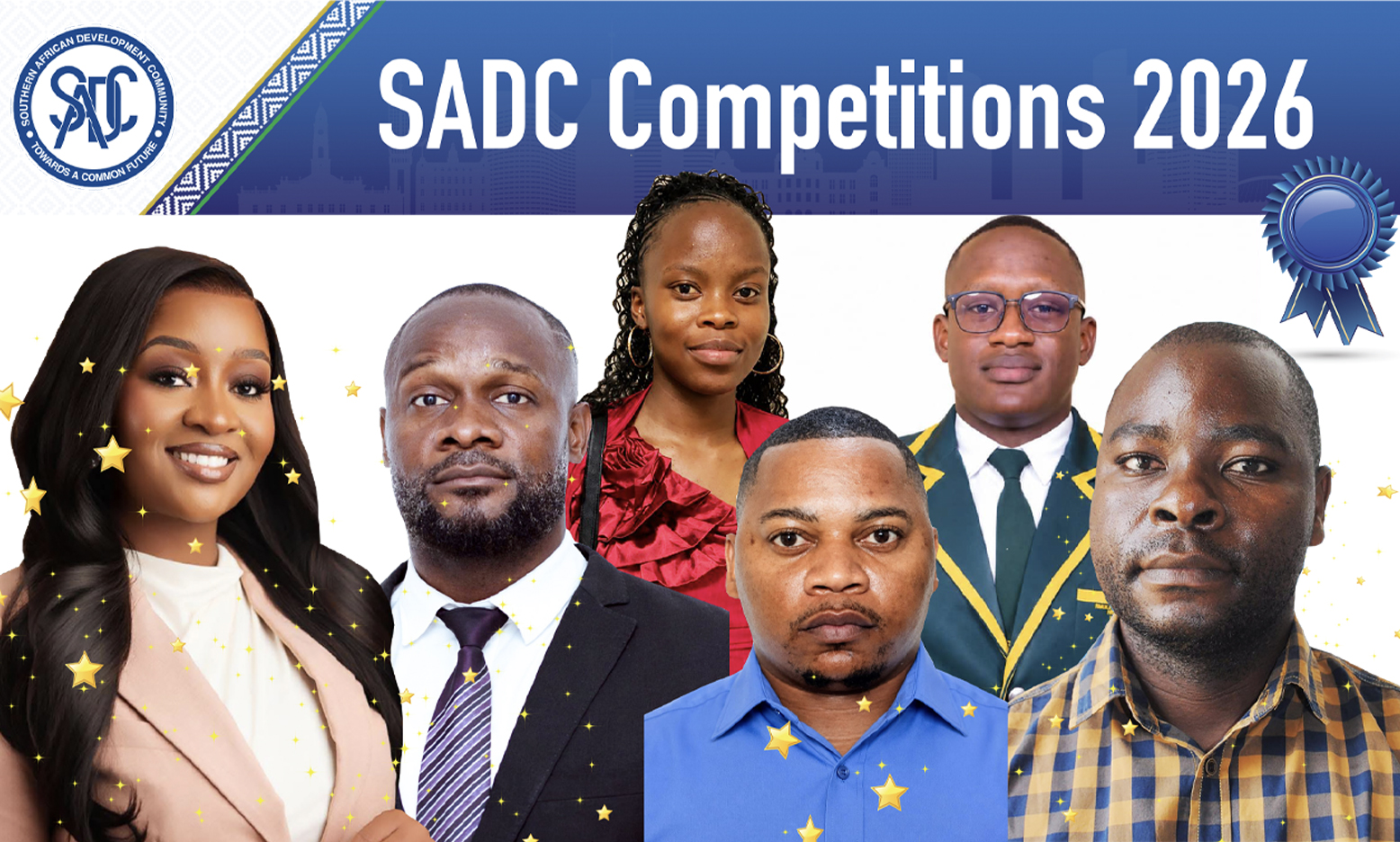
The SADC Secretariat has announced the winners of the 2026 SADC Media Awards, 2026 SADC Tertiary Institution Essay Competition and the 2026 SADC Secondary School Essay Competition, recognising outstanding talent and contributions towards promoting regional integration, cooperation and development.
The competitions brought together learners, students and media practitioners from across the SADC Member States, providing a platform for participants to demonstrate their knowledge, creativity and understanding of issues affecting the region, while encouraging greater engagement with the SADC integration agenda.
In the 2026 SADC Secondary School Essay Competition, learners from SADC Member States were invited to submit essays of up to 1,000 words on the topic, “How can SADC achieve industrialisation, transform agriculture, and energy transition for a Resilient Future?” The competition encouraged young people to examine some of the region's key development priorities and propose ideas for building a more resilient and sustainable future for Southern Africa.
Mr Thulani Mahambire of Zimbabwe emerged as the regional winner, receiving a prize of US$1,500. Ms Dirse Carmem Francisco of Mozambique was awarded second position and received US$1,000, while Mr Siyambonga Makhoba of South Africa took third position and received US$750.
The 2026 SADC Tertiary Institution Essay Competition similarly provided an opportunity for students across the region to reflect on SADC's history and consider how lessons from the region's Founders can inform responses to contemporary challenges. Participants were required to write essays of up to 4,000 words on the topic, “Compare and contrast the challenges faced by the SADC Founders in the 20th century with the current regional challenges. What lessons from the Founders can be applied to today's dilemmas?”
Ms Vuyelwa Karabo Simelane of Eswatini emerged as the winner of the Tertiary Institution Essay Competition and received US$2,000. Ms Yamikani Bottomani of Malawi secured second position and received US$1,500, while Ms Liezel Bernies Mujoro of Namibia took third position and received US$1,000.
The SADC Media Awards recognised excellence in journalism across the region, with 29 journalists qualifying for the regional competition following national-level adjudication in the Member States. The awards cover four categories, namely Print Journalism, Television Journalism, Photo Journalism and Radio Journalism, with each category offering US$2,500 for the first prize and US$1,000 for the second prize.
In the Print Journalism category, Mr Pilatos Munguambe of Mozambique emerged as the winner and received US$2,500, while Mr Aurélio Janeiro of Angola secured second position with a prize of US$1,000. In the Television Journalism category, Ms Elago Ndapewa Shitaatala of Namibia won the first prize of US$2,500, while Mr Delfim Anacleto Uatanle of Mozambique received the second prize of US$1,000.
Mr Dome Arsénio Semedo of Angola was the winner of the Photo Journalism category and received US$2,500, with Mr Siyabulela Duda of South Africa taking second position and receiving US$1,000. In the Radio Journalism category, Mr Horácio Romão of Mozambique emerged as the winner and received US$2,500, while Mr Seakga Relebogile Tladi of South Africa secured second position and received US$1,000.
The SADC competitions continue to provide an important platform for recognising excellence while encouraging citizens, particularly young people and media practitioners, to engage meaningfully with regional priorities. The essay competitions promote critical thinking among learners and students on SADC's development agenda, history and integration objectives, while the Media Awards recognise the contribution of journalists in informing the public and strengthening understanding of regional issues.
The SADC Secretariat congratulates all the winners and participants for their achievements and valuable contributions. Their work demonstrates the importance of youth participation, informed public discourse and professional journalism in advancing regional integration, cooperation and sustainable development across Southern Africa.


