
The Committee of the Southern African Development Community (SADC) Ministers Responsible for Disaster Risk Management have called for strengthened regional preparedness, increased investment in disaster risk reduction and coordinated anticipatory action to mitigate the potential impacts of the 2026/27 rainfall and cyclone season.
The call was made during the Seventh Ordinary Meeting of the SADC Committee of Ministers Responsible for Disaster Risk Management, convened virtually on 12 November 2026. The meeting brought together Ministers from SADC Member States, senior government officials, the SADC Secretariat, humanitarian and development partners and technical experts to consider the region's preparedness and provide strategic direction on measures to address emerging disaster risks.
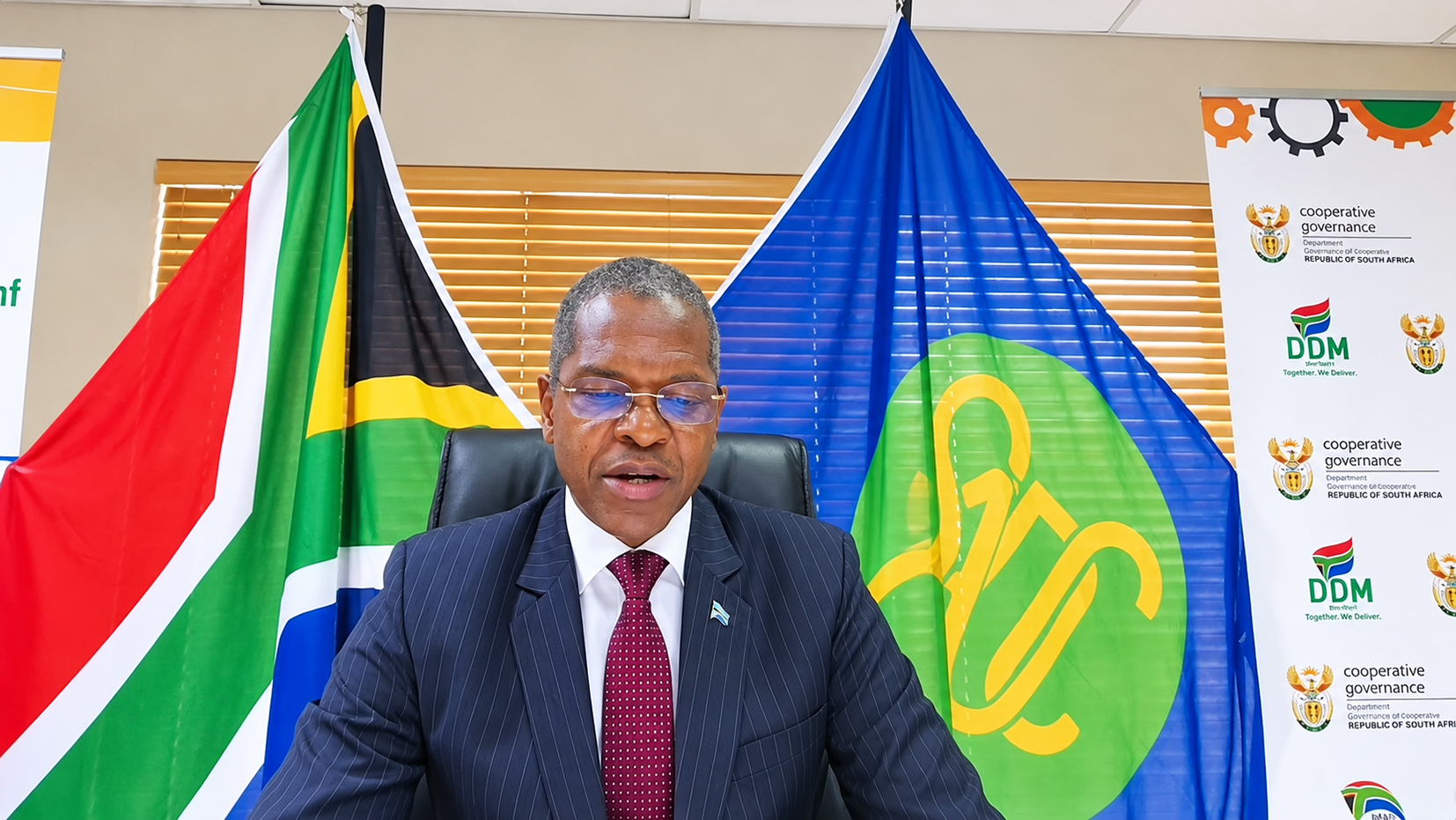
In his opening remarks, Honourable Velenkosini Hlabisa, Minister of Cooperative Governance and Traditional Affairs of the Republic of South Africa and Chairperson of the Committee, emphasised the need to translate regional climate assessments and early warning information into practical preparedness measures, supported by adequate financing, clear responsibilities and timely interventions.
He noted that although the 2025/26 rainfall season had supported a broad recovery in agricultural production, pasture, water availability and regional food supplies, the gains remained vulnerable to recurring hazards, including floods, tropical cyclones, localised dry spells and disease outbreaks. He cautioned that an improved regional outlook should not be mistaken for the elimination of vulnerability, but rather viewed as an opportunity to safeguard recovery gains before the next disaster strikes.
Representing the SADC Executive Secretary, His Excellency Mr Elias Magosi, Acting SADC Deputy Executive Secretary for Regional Integration, Dr Mike Masiye, reaffirmed the importance of strengthening regional cooperation and institutional preparedness. He noted that the Committee's twice-yearly meeting cycle, endorsed in 2026, provides an important platform for Ministers to assess preparedness ahead of the cyclone season and review its impacts afterwards, enabling more consistent strategic guidance and follow-up on regional disaster risk management priorities.
The 2026/27 seasonal outlook indicates the likelihood of strong to very strong El Niño conditions, elevated temperatures and below-normal rainfall across much of central and southern SADC. These conditions could intensify drought, heat stress and water shortages, while northern, coastal and island areas may remain exposed to flooding and other high-rainfall hazards. The resulting impacts could extend across agriculture, energy, health, infrastructure and regional markets.
Ministers were informed that approximately 53 million people in the region are projected to experience food insecurity during the 2026/27 consumption period, according to the 2026 Regional Synthesis Report on the State of Food and Nutrition Security in SADC. The report highlights that food insecurity is influenced not only by agricultural production, but also by poverty, conflict, displacement, food prices, market access and household purchasing power. This calls for a comprehensive response combining resilient agriculture, functioning regional trade, nutrition interventions, livelihood protection and shock-responsive social protection.
It was highlighted that the Regional Preparedness Snapshot indicates that approximately 41 million people may be at risk during the coming season, with costed preparedness and response requirements estimated at US$1.85 billion against approximately US$241 million currently available. This substantial financing gap underscores the urgency of moving beyond contingency planning towards secured resources, pre-arranged financing, clearly assigned responsibilities and measurable implementation.
In this regard, Ministers considered the need for Member States to finalise and validate El Niño-informed contingency plans, establish early-action triggers, secure resources, pre-position essential supplies and strengthen coordination across sectors and national borders. The importance of testing preparedness arrangements through simulation exercises was also emphasised, building on the first SADC Regional Cyclone and Flood Response Simulation Exercise, which demonstrated the value of identifying weaknesses in decision-making, early warning, authorisation, deployment and coordination before emergencies occur.
The meeting further considered the Regional Prepositioning Strategy, which seeks to strengthen the availability, positioning and timely movement of humanitarian relief supplies across the region. Effective implementation of the strategy is expected to improve regional logistics preparedness, reduce administrative and operational delays and facilitate cross-border assistance when Member States are affected by disasters.
Ministers also deliberated on the SADC Multi-Hazard Regional Anticipatory Action Framework 2026–2030, which provides a common basis for linking forecasts and agreed triggers to pre-arranged financing and early interventions. The framework seeks to shift the region from responding after disasters have occurred towards taking timely action to protect communities, livelihoods, water access, livestock, agriculture and essential services before the impacts escalate into humanitarian emergencies.
Another key priority was the full operationalisation of the SADC Humanitarian and Emergency Operations Centre (SHOC), which is envisaged as a central regional mechanism for strengthening situational awareness, supporting early warning, coordinating preparedness and facilitating the rapid mobilisation of assistance to affected Member States. Ministers underscored the need for clear institutional authority, capable leadership, adequate staffing, reliable operating procedures and sustainable financing.
The meeting emphasised that regional solidarity must be organised in advance, adequately resourced and supported by effective institutions capable of responding when assistance is most needed. Ministers were urged to ensure that regional assessments translate into national action, with clear priorities, timelines, responsibilities and resources to strengthen preparedness and protect the lives and livelihoods of communities across Southern Africa.
The Ministerial Meeting was preceded by the Meeting of SADC Senior Officials Responsible for Disaster Risk Management, held virtually on 11 November 2026.
Through these deliberations, SADC continues to advance a coordinated regional approach that places preparedness, anticipatory action and collective responsibility at the centre of disaster risk management, as Member States prepare for the potential impacts of the 2026/27 season.


