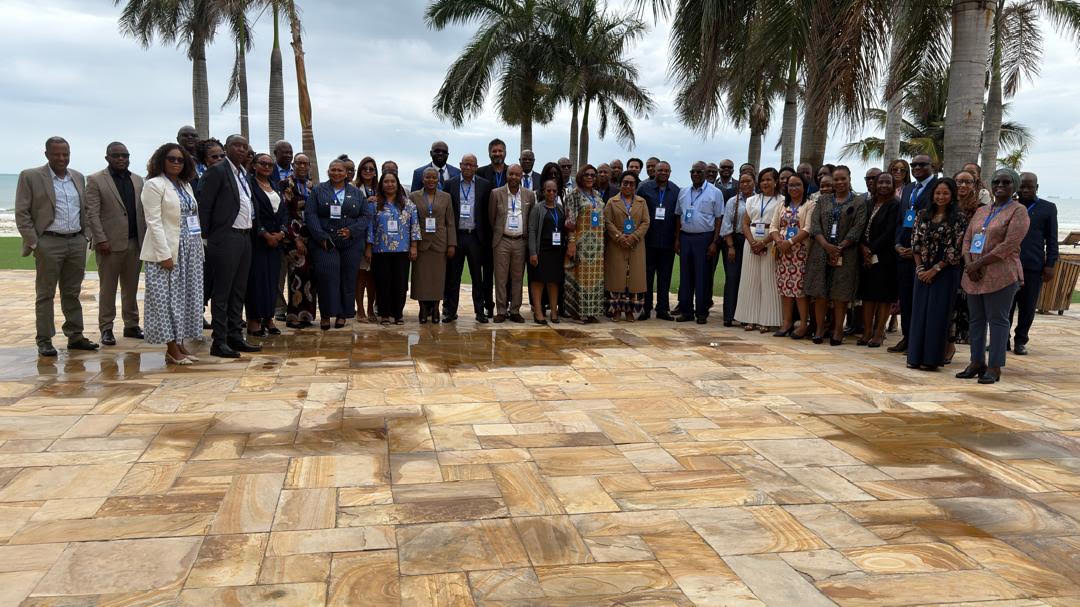
The Southern African Development Community (SADC) region has commenced a five-day Joint Meeting of HIV and Health Financing Technical Experts, National AIDS Council (NAC) Directors and the Steering Committee of the SADC HIV and AIDS Special Fund in Dar es Salaam, United Republic of Tanzania, under the theme “Accelerating HIV Prevention, Financing and Advancing Commodity Security for the HIV Response.”
Convened by the SADC Secretariat in collaboration with the United Nations institutions in East and Southern Africa, the meeting brings together Member States, HIV technical experts, health financing focal persons, NAC Directors, civil society, youth representatives, representatives of people living with HIV and cooperating partners.
The meeting takes place at an opportune time as the region seeks to protect the gains made in the HIV response while addressing persistent prevention gaps and the changing global health financing environment. SADC has recorded a 57 per cent reduction in new HIV infections, while seven Member States, namely Botswana, Eswatini, Lesotho, Malawi, Namibia, Zambia and Zimbabwe, have attained the UNAIDS 95–95–95 targets. However, progress remains uneven, with adolescent girls and young women, key and vulnerable populations and other underserved communities continuing to face significant barriers to accessing HIV and sexual and reproductive health services. Additionally, other Member States such as Madagascar and Mauritius have recently experienced increased in New HIV Infection.
The meeting will therefore consider differentiated, evidence-informed prevention approaches, including the specific situation in Madagascar as well as in smaller and concentrated epidemics in the region and adopt a common approach in ensuring that the region achieves the 2030 goal of ending HIV as a Public Health Threat in the SADC Region.
Delivering his remarks during the meeting, the Acting Director for Social and Human Development at the SADC Secretariat, Professor Raja V. Sannassee highlighted the importance of strengthening regional and national ownership of the health and HIV response amid changes in the global financing landscape. Reflecting on almost three decades of external support for HIV, TB, malaria, maternal health and nutrition, the Ag. Director called for a transition towards more sustainable, nationally and regionally driven financing.
“It is time for us, as a collective, Member States and Leadership, to support the transition to a regionally and nationally driven funding model, through the development of innovative financial mechanisms that will support domestic resource mobilisation.” Prof Sannassee
Speaking on behalf of the Government of the United Republic of Tanzania, the Executive Director of the Tanzania Commission for AIDS (TACAIDS), Dr Adam Mrisho highlighted the importance of sustaining the gains made while confronting persistent gaps in the HIV response. He noted the SADC region’s progress in expanding prevention and treatment services and reducing AIDS-related deaths but emphasised that challenges remain in identifying people who are undiagnosed and addressing the disproportionate impact of HIV on adolescent girls and young women and young men. He further called for stronger community leadership and social contracting, alongside continued action to address stigma, discrimination and other structural barriers that prevent people from accessing HIV services.
“We must look beyond traditional biomedical models. We need continued support to address the stigma, gender inequalities and punitive legal environments that fuel the epidemic and hinder access for adolescent girls and young women and key populations.” Dr Mrisho
Opening the meeting, the Chairperson of the SADC Technical and NAC Directors’ Meeting, Dr Rogerio Phili of the Republic of South Africa, called for greater focus on protecting the gains made in the HIV response while accelerating action towards ending AIDS as a public health threat by 2030. Dr Phili emphasised that accelerating HIV prevention requires approaches that are differentiated, evidence-informed and responsive to the structural inequalities affecting access to services. The Chair underscored the importance of ensuring that new prevention technologies, including long-acting options such as lenacapavir, are introduced equitably and sustainably, while strengthening regional procurement and manufacturing capacity.
“Strengthening pooled procurement, regional coordination, supply-chain resilience and opportunities for local and regional manufacturing will be essential to improving affordability, ensuring commodity security and advancing regional self-reliance.” Dr Phili
The five-day technical meeting will develop a draft SADC HIV Prevention Acceleration Roadmap, informed by the Global AIDS Strategy 2026–2031 and other global commitments. The Roadmap is expected to provide a framework of priority actions, responsibilities and timelines to accelerate HIV prevention and guide coordinated regional and national implementation towards 2030. The meeting will also contribute to the development of a Draft Declaration of SADC Heads of State and Government on Health Financing, setting out priority commitments and recommendations for strengthened domestic resource mobilisation and sustainable financing for health and the HIV response as an outcome of the Joint meeting of Ministers of Health and Ministers of Finance held in July 2026.
The meeting provides an important platform for SADC Member States and partners to translate regional commitments into practical action and to strengthen a sustainable, equitable and resilient HIV response towards 2030, thus its outcomes will also inform strategic issues to be considered by the Ministers of Health during their meeting to be held in November 2026.


