
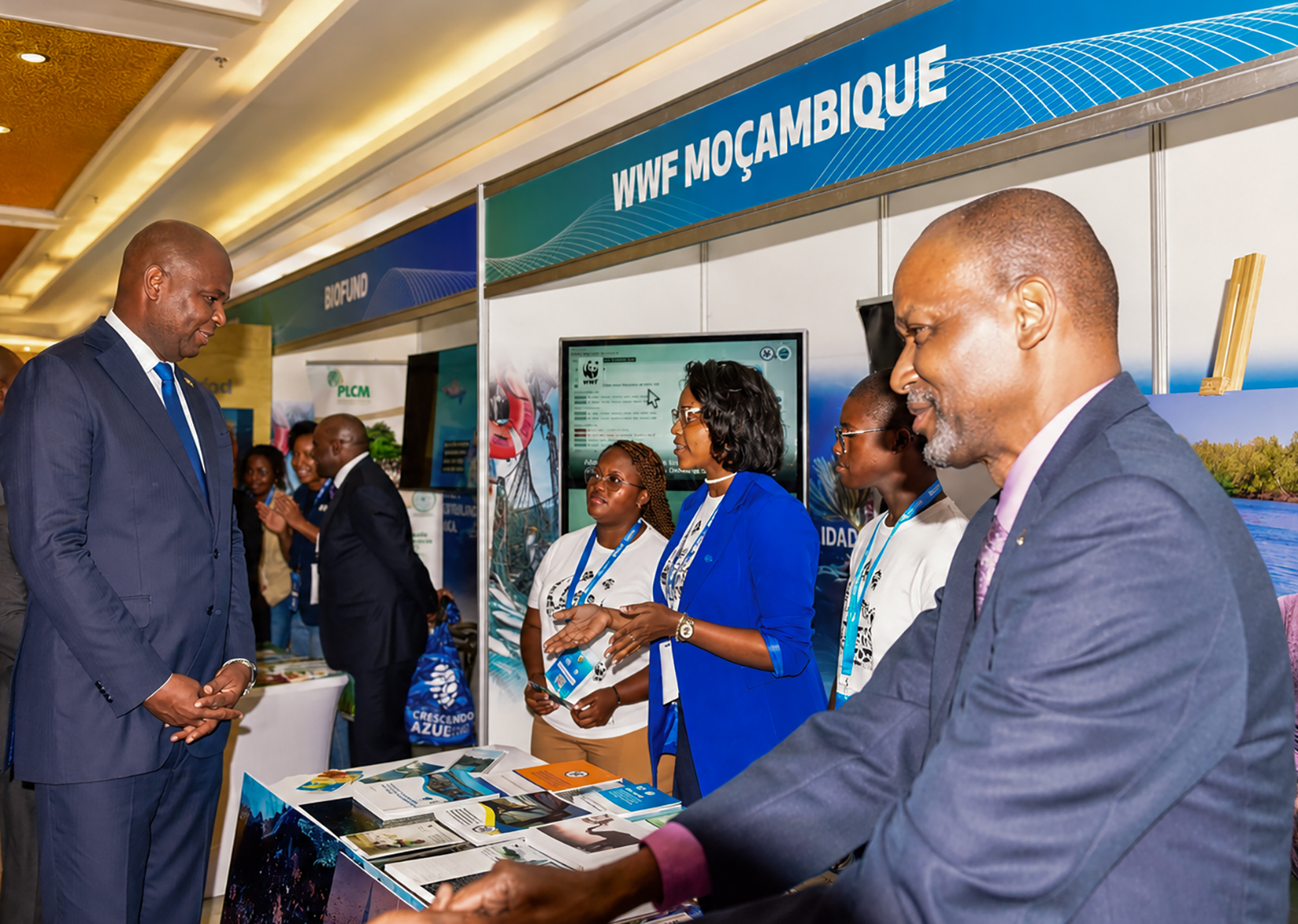
The Executive Secretary of the Southern African Development Community (SADC), His Excellency Mr. Elias Magosi, accompanied President Daniel Francisco Chapo of Mozambique at the 3rd Growing Blue Conference, also known as the Crescendo Azul Conference, held at the Joaquim Chissano Conference Centre in Maputo from 11–12 June 2026.
Convened under the theme “Blue Future: Accelerating Economic Sustainability,” the conference brought together policymakers, marine scientists, climate-finance experts, development partners, conservation organisations, research institutions and private-sector stakeholders to explore ways of unlocking the economic potential of marine resources while safeguarding vulnerable aquatic ecosystems. The event provided an important platform for dialogue on advancing a sustainable blue economy that balances economic growth with environmental stewardship, ensuring that Mozambique, the SADC region and Africa as a whole can derive lasting benefits from ocean resources while preserving them for future generations.
In a significant demonstration of the region’s commitment to translating blue economy aspirations into practical action, the conference coincided with the inauguration and formal handover of the SADC Monitoring, Control and Surveillance Coordination Centre (MCSCC) in Katembe. During the ceremony, President Chapo officially handed over the completed facility to the SADC Secretariat, marking a major milestone in regional efforts to strengthen fisheries governance, enhance maritime surveillance and improve coordination among Member States in combating fisheries-related crimes and other illegal activities in the region’s waters.
The inauguration of the MCSCC reinforced one of the conference’s central messages: that sustainable management of marine resources requires strong institutions, effective monitoring systems and coordinated regional action. As a key instrument supporting the SADC Blue Economy Agenda, the Centre will enhance information sharing, strengthen surveillance capacity and improve cooperation among Member States in safeguarding shared marine resources.
In his opening address, President Chapo underscored the strategic importance of the oceans to sustainable development and economic transformation. He emphasised the need for African countries to foster stronger collaboration and a more responsible relationship with the marine environment, noting that maritime resources are an integral component of Africa’s sustainable and inclusive development agenda. The President called for collective efforts to transform the blue economy into a driver of prosperity, creating jobs and opportunities for communities while advancing solutions for ocean security and sustainable resource management.
President Chapo further highlighted the significance of the newly established MCSCC as one of the region’s flagship initiatives for strengthening fisheries management and combating fisheries-related crimes. He noted that the Centre would enhance regional capacity to address organised illegal activities at sea and protect marine resources that support the livelihoods of millions of people across the region.
Speaking during the handover ceremony, H.E. Magosi echoed the President’s sentiments, describing the MCSCC as a tangible demonstration of the region’s commitment to converting policy aspirations into concrete results. He highlighted the progress achieved by SADC Member States through strengthened regional institutions, enhanced cooperation and the establishment of mechanisms aimed at protecting shared marine resources while promoting sustainable development.
The Executive Secretary commended the Republic of Mozambique for its leadership and commitment to regional initiatives that support sustainable resource management and maritime security. He further observed that illegal, unreported and unregulated (IUU) fishing continues to undermine the sustainability of marine resources and causes economic losses estimated at more than US$400 million annually across the SADC region. He therefore called for intensified regional cooperation and sustained commitment to eliminating IUU fishing and protecting the livelihoods of communities that depend on fisheries resources.
The MCSCC itself represents a strategic regional investment in addressing these challenges. Constructed with financial support from the World Bank amounting to US$1.8 million, while the Government of Mozambique provided the land, the Centre is expected to play a pivotal role in improving fisheries monitoring, strengthening maritime security and supporting the sustainable use of ocean resources throughout the SADC region.
The conference was organised by the Ministry of Agriculture, Environment and Fisheries of the Republic of Mozambique in partnership with SADC, the World Bank, the Food and Agriculture Organization (FAO) and other development partners. Participants underscored that a sustainable blue economy offers a viable pathway to economic growth, job creation, food security and climate resilience and called for accelerated action, stronger partnerships and increased investment to transform the vision of a “Blue Future” into practical and lasting outcomes for the region.
Discussions focused on harnessing marine resources to drive economic growth, create employment opportunities, strengthen food security and enhance climate resilience, while protecting the marine and coastal ecosystems that underpin these benefits. Participants emphasised the need for stronger regional cooperation, increased investment and innovative approaches to sustainable ocean governance as critical enablers of long-term prosperity.
The successful hosting of the conference, together with the inauguration of the MCSCC, underscored the growing commitment of Mozambique and the SADC region to advancing sustainable ocean governance, strengthening maritime security and harnessing the blue economy as a catalyst for inclusive and sustainable development.
Together, these milestones demonstrated how regional cooperation, institutional development and strategic investment can help unlock the full potential of Africa’s blue economy while ensuring the long-term protection of its marine resources for future generations.


