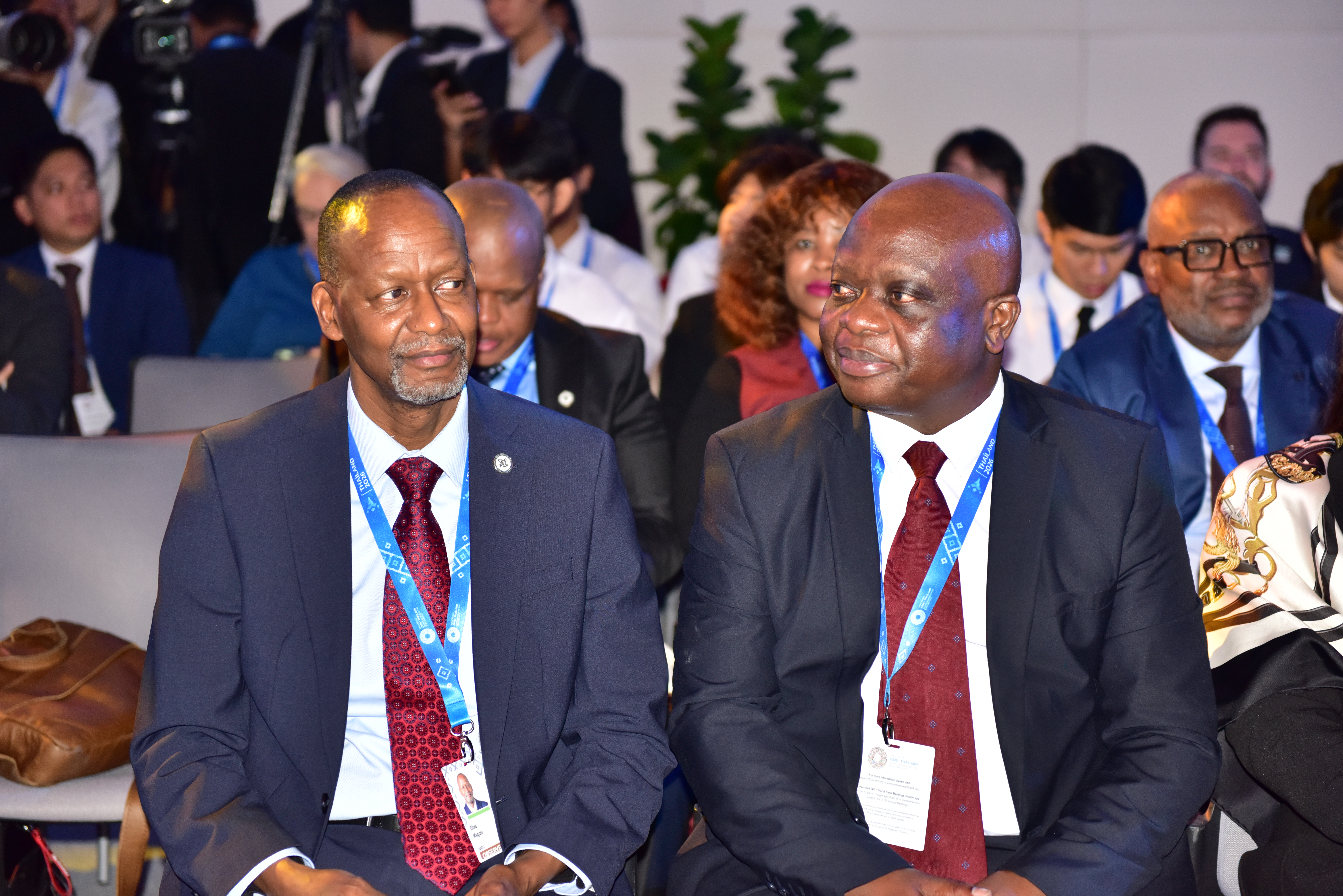
Bangkok, Thailand, 12 October 2026 – His Excellency Mr Elias M. Magosi, Executive Secretary of the Southern African Development Community (SADC), has joined global leaders, finance ministers, central bank governors, private sector executives, academics and development partners at the 2026 Annual Meetings of the International Monetary Fund (IMF) and the World Bank Group (WBG) taking place at the Queen Sirikit National Convention Center (QSNCC) in Bangkok, Kingdom of Thailand.
The Annual Meetings provide a global platform for dialogue on pressing economic challenges, development financing and policies to promote sustainable and inclusive growth. For SADC, participation offers an opportunity to engage with international partners on regional priorities, including industrialisation, infrastructure development, digital transformation, employment creation and climate resilience.
On 12 October, the Executive Secretary took part in two sessions examining the growing role of artificial intelligence (AI) in economic development, its implications for the future of work and the opportunities it presents for young people.
The first session, led by Mr Ajay Banga, President of the World Bank Group, explored how countries can move beyond AI experimentation towards practical, affordable applications that deliver tangible development benefits. The discussion focused on Small AI—solutions tailored to local languages, infrastructure and financial resources, enabling developing countries to harness technology to address everyday challenges without relying solely on costly, sophisticated systems.
The session featured global leaders, including His Excellency Mr Tharman Shanmugaratnam, President of the Republic of Singapore, and Ms Kristalina Georgieva, Managing Director of the IMF, alongside representatives from government, technology, finance and development institutions.
A central theme was the dual impact of AI on employment. While automation may displace certain jobs, AI can also enhance productivity, support entrepreneurship and create new economic opportunities. Given the private sector’s central role in job creation, participants emphasised the importance of translating technological advances into productive enterprises, improved competitiveness and better livelihoods.
The discussion further highlighted the potential of practical AI applications to transform productive sectors such as agriculture and manufacturing by reducing costs, improving efficiency and enabling better decision-making. It also underscored the need for governments to understand the changing demands of labour markets and prepare their populations for emerging opportunities.
These, are particularly relevant to SADC’s efforts to accelerate industrialisation, improve agricultural productivity and expand decent and productive employment. Harnessing AI effectively will require solutions suited to the region’s development context, alongside investment in digital infrastructure, skills development and an enabling environment for innovation.
The second session, Youth Dialogue with the IMF First Deputy Managing Director, examined how AI, entrepreneurship and innovation are reshaping opportunities for young people. Speakers stressed the need to prepare youth for the changing world of work which requires more than access to technology; it also demands relevant skills, practical experience and opportunities to turn ideas into viable enterprises.
Participants highlighted the enduring importance of human capabilities, including creativity, critical thinking, adaptability and practical problem-solving. They also emphasised the need to align education and training with labour-market needs, improve young entrepreneurs’ access to finance and markets, and address the digital divide between urban and rural communities.
The dialogue reinforced the importance of creating an environment in which young people can participate meaningfully in economic transformation—as skilled workers, innovators and business owners. For SADC, investment in digital literacy, vocational and technical training, entrepreneurship and access to economic opportunities can help equip the region’s young population to contribute to emerging industries and future growth.
The discussions align with the objectives of the SADC Regional Indicative Strategic Development Plan (RISDP) 2020–2030 and SADC Vision 2050, which seek to advance regional integration, industrialisation and sustainable economic transformation. They also highlight the importance of international cooperation, knowledge exchange and development partnerships in helping Member States respond to technological change.


