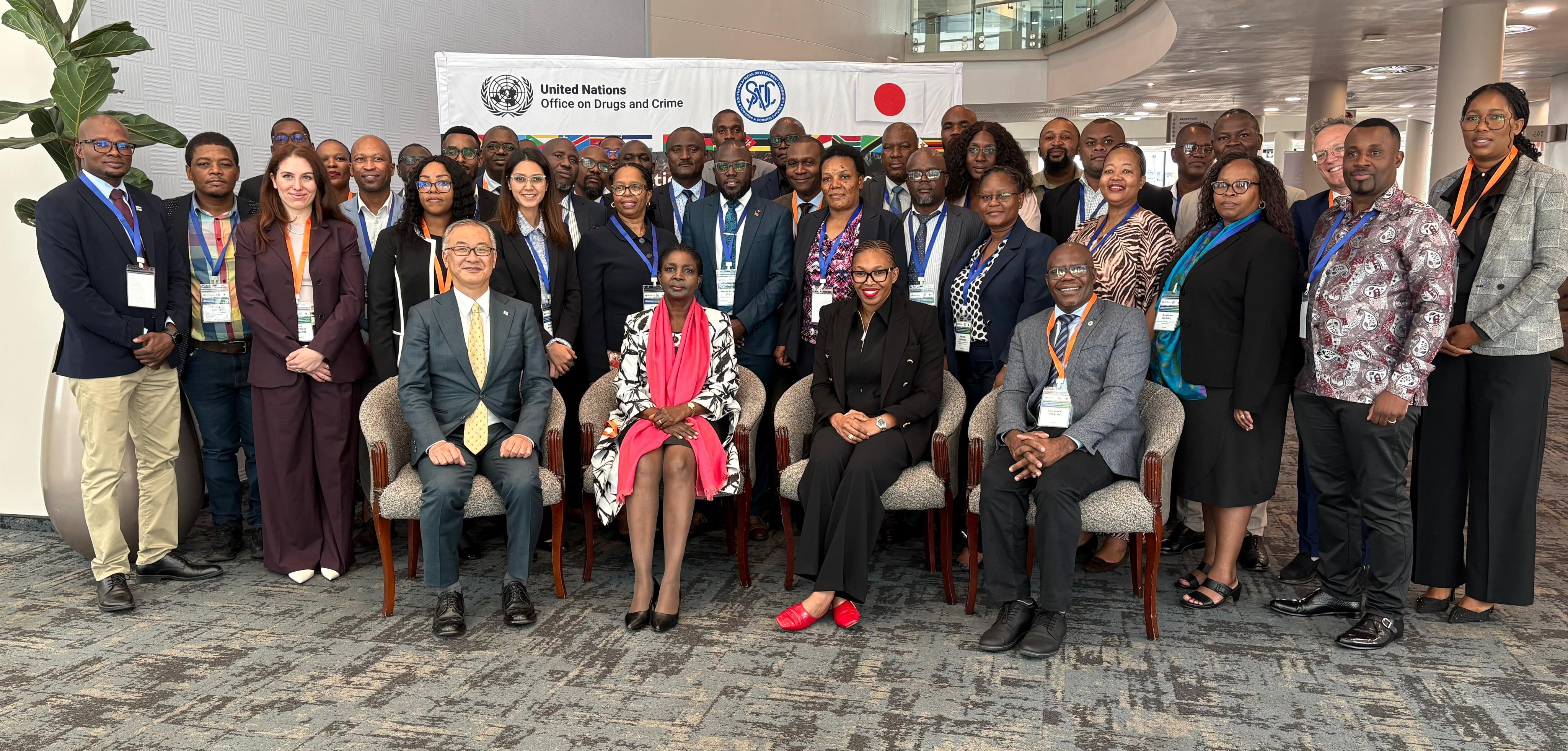
The Southern African Development Community (SADC) Secretariat with support from the United Nations Office on Drugs and Crime (UNODC) convened a two-day Regional Validation Workshop on the Proposed Amendments to the SADC Protocol on Mining. The workshop was held on 19–20 February 2026 in Johannesburg, Republic of South Africa and was, apart from representatives from SADC Member States and SADC Secretariat, was attended by representatives from the UNODC, the United Nations Economic Commission for Africa (UNECA) and the Mining Industry Association of Southern Africa (MIASA -representing the private sector).
The validation workshop was a follow-up to the regional consultations held from 9–10 September 2025 in Gaborone, Botswana, which brought together key stakeholders from government, industry and law enforcement to review the draft text and identify priority areas for strengthening governance of the mining sector. Through the participatory discussions the workshop aimed at building regional consensus on the amendments to the 2000 Protocol on Mining, thereby ensuring that all Member States have a chance to influence and endorse the strengthening of legal, institutional and governance mechanisms across the mining sector in SADC.
Since the signing of the Protocol in 1997 and entry into force in February 2000, the mining landscape has evolved. The revision process therefore intends to align the Protocol with current regional policy landscape and priorities which among others include, the revised SADC Treaty, Regional Mining Vision (RMV), Regional Indicative Strategic Development Plan (RISDP), SADC Industrialization Strategy and Roadmap (SISR) 2015,63 the Protocol on Industry, continental and international policies on minerals development. Furthermore, the revision also seeks to cover the rapidly unfolding global shift from fossil fuels to Renewable energy sources and the resulting opportunities and threats to the SADC minerals and linkages sector.
In his welcoming remarks, SADC Secretariat Senior Programme Officer responsible for Value Chains, Mr Calicious Tutalife underscored that the revision process was long overdue. He also informed the delegates that SADC is endowed with the most precious mineral deposits in the world and legal instruments guiding the sector should be up to date and respond to the global needs and developments for the benefit of the people in SADC. He also acknowledged the support the Secretariat has received from international cooperating partners and various stakeholders in the development of the regional minerals value chain in general and specifically to the revision of the Protocol through the UNODC, with financial support from the Government of Japan.
His Excellency Ambassador Fumio Shimizu of Japan to Republic of South Africa delivered the keynote address. Ambassador H.E Shimizu reaffirmed Japan's commitment to promoting the rule of law and supporting sustainable mineral resource development in the SADC region. He underscored that efforts to strengthen the rule of law across the mineral value chain can play a significant role in enabling the region’s abundant natural resources contribute to sustainable economic growth, environmental protection, and the well-being of its people.
Ms. Ntokozo Nzimande the Deputy Director-General at the Department of Mineral Resources and Energy (DMRE) of the Republic of South Africa challenged participants to move beyond theoretical discussions to deliver concrete outcomes and urged them to ensure that the review of the Mining Protocol is a resounding success for the betterment of the lives of the regional citizens.
For her part, Ms. Jane Marie Ong’olo, the Regional Representative of UNODC emphasised on the urgency of revising the Protocol to combat criminal infiltration in mineral supply chains, citing projections that global demand for critical minerals will reach nearly 41 million tons by 2040.


