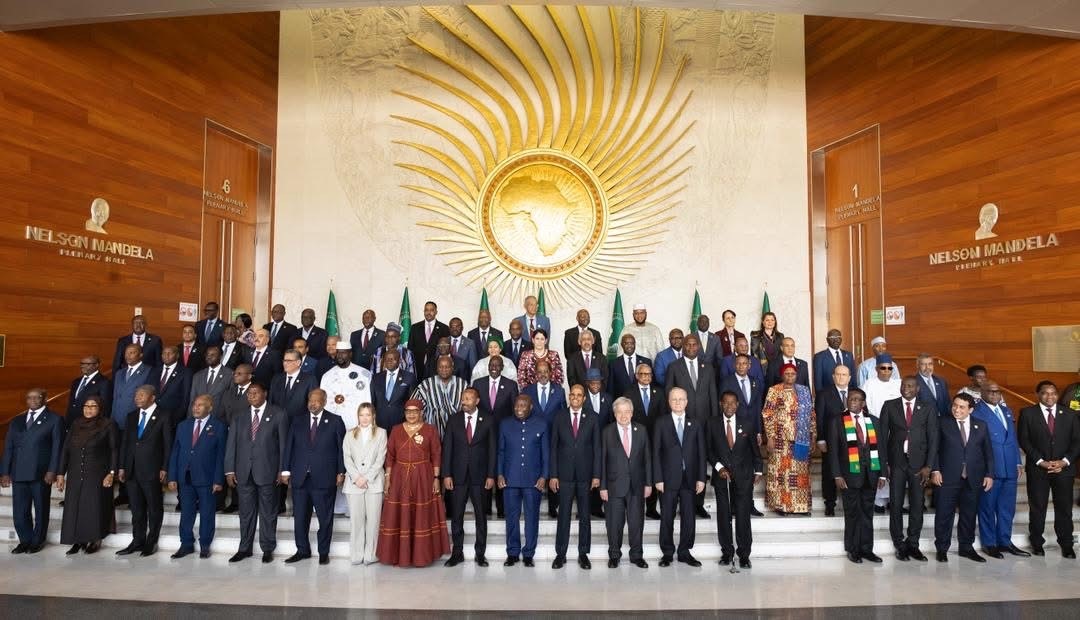
The Executive Secretary of the Southern African Development Community (SADC), H.E. Mr. Elias Magosi, has concluded a successful mission to the 39th Ordinary Session of the Assembly of the African Union, held from 15-16 February 2026 at the AU Headquarters in Addis Ababa.
Convened under the 2026 theme, “Assuring Sustainable Water Availability & Safe Sanitation Systems to Achieve the goals of Agenda 2063,” the Summit brought together Heads of State and Government, leaders of Regional Economic Communities (RECs), international partners, and key stakeholders to deliberate on Africa’s development trajectory and collective responses to continental priorities.
Throughout the Summit, the Executive Secretary participated in a series of high-level engagements aimed at advancing SADC’s regional mandate in alignment with Agenda 2063 and the African Continental Free Trade Area (AfCFTA).
Among the key engagements were:
- High-Level Dialogue on the New African Financial Architecture (NAFA): Discussions focused on strengthening Africa’s financial sovereignty, mobilising domestic resources, and enhancing the role of RECs in structuring bankable regional infrastructure projects. The Executive Secretary underscored SADC’s pipeline development approach anchored in the RISDP 2020–2030, highlighting infrastructure as a catalyst for industrialisation, regional value chains, and inclusive growth.
- High-Level Symposium on Advancing a Visa-Free Africa for Economic Prosperity: The Executive Secretary emphasised that mobility is not merely a facilitation measure, but a strategic economic transformation agenda. He reiterated that regional integration cannot be fully realised if movement of people, goods and services remains constrained.
- Inter-RECs/RMs Coordination and Collaboration Platform: During the meeting of Chief Executive Officers of RECs and Regional Mechanisms, the Executive Secretary assumed the Chairpersonship of the Platform for a one-year term. In his acceptance remarks, he reaffirmed SADC’s commitment to fostering inclusive dialogue, strengthening coordination among RECs, and ensuring coherence between regional implementation and continental priorities.
- Peace and Security Consultations: On the margins of the Summit, the Executive Secretary held consultations with AU counterparts and Member States on evolving political and security developments in Madagascar, the Democratic Republic of Congo (DRC), and Mozambique. He reiterated SADC’s adherence to the established structures of the Organ on Politics, Defence and Security Cooperation, while emphasising the importance of inclusive dialogue, coordinated mediation efforts, and sustainable ceasefire arrangements.
- Youth and Women Empowerment & Social Development Platforms: The Executive Secretary participated in the launch of the Africa Segment of the Creating Opportunities for Youth and Women in Africa (COYWA) Programme and engaged in discussions on water, sanitation and hygiene (WASH), recognising water security as a foundational element for public health, food security, energy production, and climate resilience.
The Summit also provided an opportunity for the Executive Secretary to hold several bilateral courtesy meetings with Ministers of Foreign Affairs, AU Commissioners, Special Envoys, and heads of partner institutions. These engagements focused on strengthening collaboration between SADC and the AU Commission, enhancing coordination in peace processes, and advancing shared development initiatives.
Emphasis was placed on ensuring that mediation processes are inclusive and locally owned, while maintaining alignment and information-sharing between SADC, the AU, and other relevant regional actors.
The conclusion of the 39th AU Summit marks a renewed commitment by SADC to translate continental decisions into concrete regional action. Moving forward, SADC will:
- Accelerate implementation of the RISDP 2020–2030, with priority focus on infrastructure, energy security, water governance, and industrialisation;
- Strengthen peace and security mechanisms in collaboration with the AU and Member States, ensuring sustainable political transitions and conflict prevention;
- Advance regional economic integration in support of AfCFTA objectives through policy harmonisation and removal of barriers to intra-African trade;
- Promote greater mobility and people-to-people connectivity as enablers of economic prosperity;
- Deepen coordination among RECs and Regional Mechanisms to enhance coherence in implementing Agenda 2063 flagship programmes.
In his closing reflections, the Executive Secretary reaffirmed that SADC remains firmly aligned with continental aspirations and committed to delivering tangible results that improve the livelihoods of citizens across Southern Africa.
The Secretariat will continue to engage Member States, partners and stakeholders to ensure effective follow-up on Summit outcomes and sustain progress toward a peaceful, integrated and prosperous region within a united Africa.


