
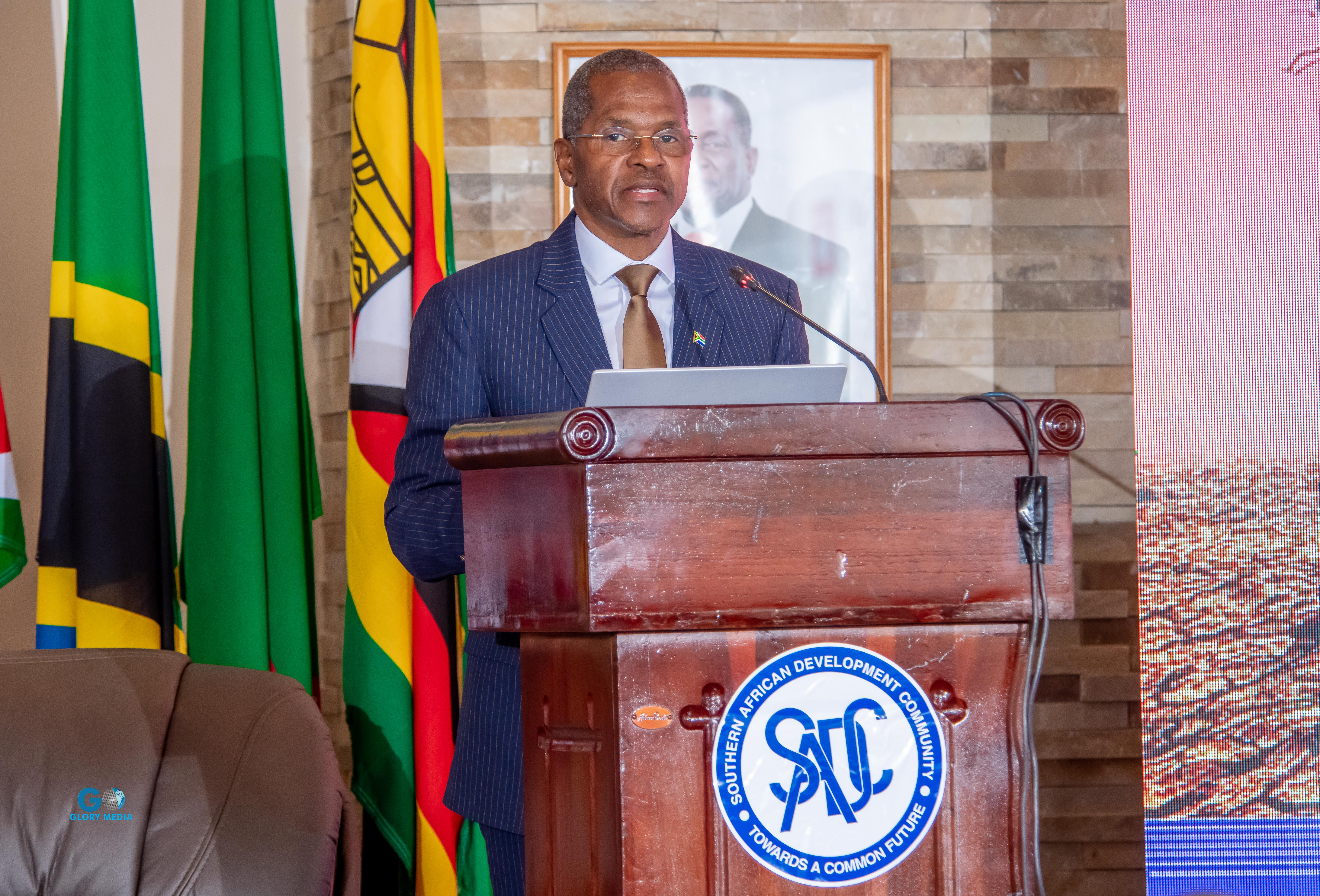
We, the Ministers responsible for Disaster Risk Management of the Southern African Development Community (SADC), together with representatives of Cooperating Partners, Development Finance Institutions, United Nations Agencies, private sector actors, and distinguished stakeholders, meeting in Masvingo, Republic of Zimbabwe, on 14 May 2026, at the SADC Ministerial Roundtable on Disaster Recovery and Resilience Building convened under the theme, “Transforming Disaster Risk into Resilience Dividends: A Risk-Informed Recovery Framework for Agrifood Systems and Sustainable Development in the SADC Region,” express our sincere appreciation to the Government and people of the Republic of Zimbabwe for hosting this important platform and to the SADC Secretariat for convening this timely dialogue at a critical moment for the region.
We recognise that the SADC region is confronting an increasingly severe and systemic disaster risk landscape, characterized by recurring droughts, floods, cyclones, and compounding shocks that are increasing in frequency and severity of impacts. Since 2019, Member States have experienced back-to-back disasters, including Cyclones Idai, Kenneth, Ana, Gombe, and Freddy, alongside recurrent droughts and associated food insecurity, which have collectively undermined development gains, weakened resilience, strained national budgets, and deepened vulnerability across communities. We acknowledge that these disasters are no longer isolated humanitarian events, but systemic threats to sustainable development, regional integration, and economic transformation.
We also recognise the compelling evidence from Post-Disaster Needs Assessments across the region, which demonstrate that disaster-related losses are escalating, financing gaps remain persistent, and the same vulnerable geographic areas are repeatedly affected before full recovery can be achieved. This has created a structural recovery deficit cycle in which Member States are often compelled to repeatedly respond to crises, with insufficient fiscal and institutional space to invest in transformative recovery. We note with concern that fragmented disaster loss data and underinvestment in resilience continue to weaken the region’s ability to fully quantify risk, build bankable investment cases, and mobilize adequate financing for resilient recovery.
We acknowledge the findings of the Global Assessment Report 2025, which reinforce that disaster losses are systemic and growing, and that investment in disaster risk reduction and resilience is not merely a social imperative, but a high-return economic policy capable of generating resilience dividends through avoided losses, enhanced productivity, and stronger development outcomes. We therefore affirm that resilient recovery must be repositioned from a post-crisis expenditure to a strategic investment agenda that supports long-term prosperity.
We recognise that the intensifying disaster landscape poses direct risks to the achievement of the Sustainable Development Goals, Africa’s Agenda 2063, and the implementation of the SADC Regional Indicative Strategic Development Plan (RISDP) 2020–2030, particularly in relation to food security, industrialization, infrastructure development, and regional integration. In a region where agriculture remains central to livelihoods, employment, and GDP, we underscore that repeated climate shocks are severely undermining agrifood systems, exposing the unsustainability of reliance on vulnerable production systems, and reinforcing the urgent need for climate-smart agriculture, resilient water systems, irrigation expansion, renewable energy, resilient infrastructure, and strengthened social protection.
We commend Member States for the practical experiences and leadership shared during this Roundtable, including lessons on addressing the impacts of back-to-back disasters, institutionalizing Post-Disaster Needs Assessments, strengthening urban resilience, reducing and advancing proactive investments in drought resilience and water security. We further acknowledge the critical insights shared by Cooperating Partners and technical institutions, which reinforced that resilient recovery requires a fundamental shift in mindset from rebuilding what was lost toward deliberately building back better through risk-informed systems transformation.
We recognise the strong emphasis placed on transforming agrifood systems as a central pillar of resilience in a region where agriculture underpins livelihoods, food security, and economic stability, including the need to move beyond restoring vulnerable production systems toward climate-smart agriculture, resilient value chains, irrigation expansion, water security, and integrated food systems transformation. We also note important lessons on the urgent need to strengthen resilient recovery along the cyclone belt of SADC, where repeated shocks continue to expose structural vulnerabilities and compromise long-term development, underscoring the necessity of embedding recovery within broader regional and national planning frameworks. The Roundtable further highlighted that recovery outcomes are largely determined before disasters occur, through stronger recovery readiness, institutional preparedness, policy coherence, and investment in risk-informed planning systems at both national and regional levels. Collectively, these experiences and partner insights reaffirm that while vulnerabilities are deepening, practical pathways exist to transform disaster risk into resilience dividends through anticipatory planning, integrated resilience systems, and sustained political and financial commitment
We also acknowledge that SADC already possesses a robust ecosystem of policy frameworks and strategic instruments to support resilience building. The challenge before us is therefore not the absence of frameworks, but the urgent need to accelerate implementation, strengthen readiness, mobilize investment, and scale coordinated action.
We collectively commit to transition from fragmented, reactive, and predominantly humanitarian-centred disaster response toward a coordinated, risk-informed, and investment-driven model of resilient recovery that deliberately transforms disaster risk into resilience dividends for sustainable development. We commit to advancing resilient recovery as a strategic economic and development priority, central to protecting development gains, strengthening regional integration, and promoting long-term prosperity.
We direct the SADC Secretariat to work with partners to initiate the operationalise the SADC Regional Disaster Recovery Framework and Action Plan, which will support Member States in shifting from recovery deficits toward resilience-led growth. This programme should prioritize the development of a pipeline of bankable regional and national projects in resilient agrifood systems, drought and water resilience, resilient infrastructure, renewable energy, urban resilience, ecosystem restoration, and social protection systems.
We further commit to strengthening national and regional readiness for resilient recovery through institutionalized recovery planning, stronger policy frameworks, enhanced Post-Disaster Needs Assessment capacities, improved regional coordination, and greater utilization of SADC to support preparedness, recovery, and resilience building.
We call upon the African Development Bank, United Nations agencies, bilateral partners, climate finance institutions, and the private sector to work with SADC in developing a coordinated regional resilience financing architecture that moves beyond fragmented post-disaster funding toward scalable, innovative, and predictable financing solutions. This should include blended finance, guarantees, climate funds, insurance, risk pooling, and other instruments capable of unlocking the scale of investment required to build resilient systems across the region.
We further call for strengthened collaboration on Loss and Damage, resilient recovery, agrifood systems transformation, and integrated resilience-building models that can convert climate and disaster risks into practical economic opportunities and resilience dividends for Member States.
We reaffirm that the SADC region can no longer afford a cycle of repeated losses, incomplete recovery, and escalating vulnerability. We therefore resolve to work collectively through stronger political commitment, practical partnerships, strategic investment, and regional solidarity to build back better together and transform disaster risk into resilience dividends for a prosperous, resilient, and sustainable SADC region.


