
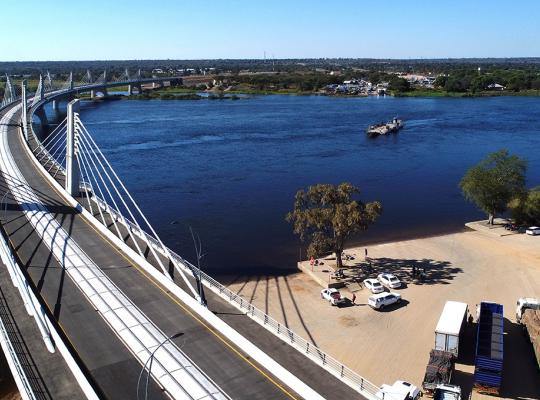




The Secretariat of the Southern African Development Community (SADC) has started facilitating and coordinating the convening of a SADC Infrastructure Investment Conference to be held from June 27 to 28 2013 in Maputo, Mozambique.
Read MoreSADC Executive Secretary Dr. Tomaz Augusto Salomão, and the German Ambassador to Botswana & SADC, H.E Mrs Annett Günther, signed, on April 10, 2013, four agreements formalising support from the Federal Republic of Germany to the SADC Region.
Read MoreThe Limpopo Water Course Commission is looking for a suitable candidate to assist with the coordination and implementation of the Integrated Water Resources Management (IWRM) Plan. The River Basin IWRM Plan 2011-2015 outlines the strategic framework and plan to implement the LIMCOM Agreement.
Read MoreThe Fifth SADC Digital Broadcasting Migration Forum took place on April 15-17, 2013 in Swakopmund, Namibia. The main objective was to review the implementation of the SADC Roadmap for Digital Broadcasting Migration in the SADC Member States and to address challenges in meeting the SADC Analogue Switch Off (ASO) deadline of December 31, 2013.
Read More
The SADC Treaty is the founding document for the establishment of the Southern African Development Community (SADC). In pursuance of the principles of Towards a Southern African Development Community, a declaration was made by the Heads of State or Government of Southern Africa, at Windhoek, Namibia, in August 1992 affirming their commitment to establish a Development Community in the region.
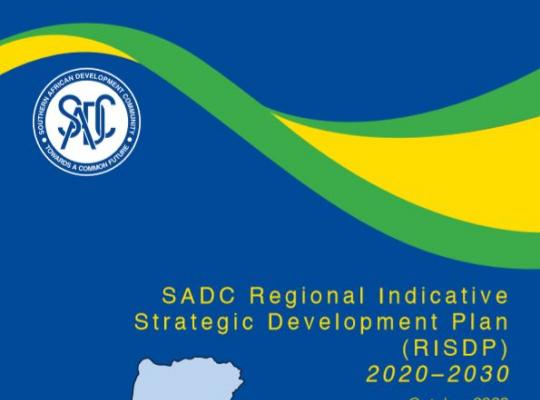
The Regional Indicative Strategic Development Plan of SADC is a comprehensive 15–year strategic roadmap, which provides the strategic direction for achieving SADC’s long term social and economic goals. It also provides the SADC Secretariat and other SADC institutions with clear guidelines on SADC’s approved social and economic priorities and policies and therefore, enhancing their effectiveness in discharging their facilitating and coordinating role. It was approved by SADC Summit in 2003 and its effective implementation began in 2005.
The Harmonised Strategic Indicative Plan for the Organ also referred to as the SIPO II provides a review of the first edition of the Plan reflecting on the milestones and challenges of implementation faced by Member States and other implementing stakeholders. On the whole there has been substantial progress in the SADC region on issues related to political governance, the observation of elections, the establishment of the SADC Electoral Advisory Council (SEAC) and the mediation units. Challenges still remain in the areas of climate change, economic recession, and unconstitutional change of governments, growing vulnerability of national borders, illicit mining and so forth.